Bangkok Suit Care: How to Protect Your Bespoke Suit in Tropical Humidity
Proper Bangkok suit care is the difference between a bespoke suit that lasts 15 years and one that develops mildew, fades, and loses its drape within 18 months. The tropical climate creates conditions that European wardrobe advice was never designed to handle: 80% average humidity, 240+ humid days per year, and warm temperatures that accelerate every form of fabric degradation. This guide covers exactly what to do, what to avoid, and which mistakes will quietly destroy your investment.
If you have just commissioned a suit from one of the shops in our 30 best tailors in Bangkok guide, this is the maintenance routine that will protect it. For understanding why some construction methods hold up better in humidity than others, the anatomy of a bespoke suit explains how canvas and lining choices affect long-term durability. And if you are deciding which fabrics to commission in the first place, the best suit fabrics for Bangkok’s humid climate covers selection at the fabric-buying stage.
Bangkok suit care is fundamentally different from suit care in temperate climates. Humidity is the enemy: it breeds mildew, weakens wool fibers, encourages moth activity, and accelerates color fading. The good news is that protection is straightforward once you know the rules. Also, see our 30 best tailors in Bangkok rankings if you need a tailor for restoration or alteration work.
Why Bangkok Suit Care Requires Special Rules
A bespoke wool suit stored in London will reach equilibrium with the surrounding air at roughly 50-60% relative humidity. Stored in Bangkok, that same suit sits in 75-85% humidity for most of the year. Wool absorbs and releases moisture from its environment, so it is constantly in a slightly damp state. This creates four specific problems that do not exist in temperate climates.
First, mildew. Mold spores are abundant in tropical air, and when they settle on damp wool, they germinate quickly. Within weeks of improper storage, you can see grey-green spots emerging on jacket linings or trouser cuffs. Second, accelerated fiber breakdown. Persistent moisture weakens wool fibers and breaks down the natural lanolin that gives wool its resilience. Third, increased moth and silverfish activity. Tropical insects breed faster in humid conditions and are particularly attracted to organic fibers. Fourth, lining and canvas separation. Glued or fused construction (common in cheaper tailoring) softens in humidity, and the bonded layers can separate. Proper Bangkok suit care addresses all four threats.
The good news is that Bangkok’s experienced expat and local executive community has refined a wardrobe-care system that works. Most of the principles below are widely practiced in Hong Kong, Singapore, and Mumbai as well, and they will keep your investment in usable condition for decades.
Bangkok Suit Care Essentials
Bangkok Suit Care: The Storage Setup
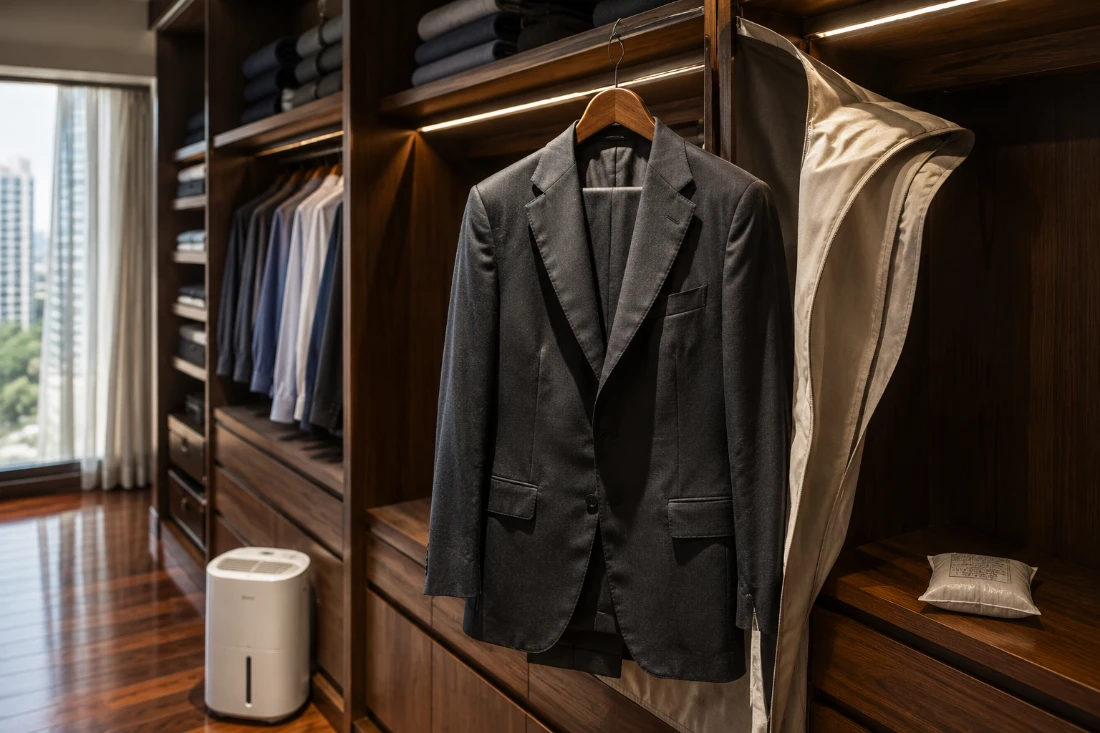
Proper Bangkok suit care begins with how the suit is stored when not in use, which in practice is more than 95% of its life. Getting the storage environment right is the single highest-impact decision you can make for your bespoke wardrobe.
1. The Right Hanger Matters Enormously
Wire hangers and thin plastic hangers will deform a bespoke jacket’s shoulder construction within months. Bangkok’s humid air makes wool more pliable, which means hanger imprint forms faster than in dry climates. Always use wooden, contoured hangers with a shoulder width of at least 5cm at the curve, ideally matching the jacket’s natural shoulder span.
Best choice: cedar or maple hangers with rounded shoulder ends and a non-slip felt or velvet bar for trousers. Cedar offers the additional benefit of repelling moths and silverfish naturally, which is particularly valuable in Bangkok.
2. Garment Bags: Breathable Cotton, Never Plastic
The plastic bag your suit comes home in from the dry cleaner is one of the most common Bangkok suit care mistakes. Plastic traps moisture against the fabric and creates a micro-environment perfect for mildew growth. Remove the suit from any plastic the moment you bring it home and never store it in plastic again.
Best choice: a breathable cotton or canvas garment bag, used only when traveling or for long-term protection from dust. For daily storage, no bag at all is preferable to a plastic one. Cedar and lavender sachets inside the closet repel insects without sealing in humidity.
3. Air Circulation: The Closet Cannot Be Sealed
A closet that is fully sealed against airflow is a closet that traps humidity. Bangkok suit care requires that air can move through the storage space. Leave at least 3cm of space between hangers (jackets need to breathe), keep the closet door open or vented for several hours per week, and never store suits pressed against a wall that gets direct afternoon sun.
Best choice: if your closet is a fully enclosed wardrobe, install a small inline fan or louvered door panel. For walk-in closets, leaving the door cracked open for several hours per day is often sufficient.
4. Dehumidifiers and Silica Gel: The Bangkok Essentials
For any wardrobe holding more than two or three bespoke suits, an electric dehumidifier or moisture-absorbing pack is non-negotiable in Bangkok. A small electric dehumidifier set to 55% relative humidity will protect a walk-in closet entirely. For smaller wardrobes, calcium chloride moisture absorbers (sold widely in Bangkok as “Thirsty Hippo” or similar brands) absorb visible amounts of water from the air.
Best choice: a 500ml-1L compact dehumidifier (Mitsubishi, Eurox, or Toshiba models popular in Bangkok) emptied weekly. Silica gel packs throughout drawers and shelves provide secondary protection. Replace silica gel packs every 60 days during rainy season.
5. Resting Between Wears
A wool suit needs at least 24 hours to release the moisture it absorbed from your body and the environment during wear. In Bangkok, where you may have perspired into the lining during the day, that recovery time should be closer to 48 hours, with the suit hanging in a well-ventilated space.
Best practice: own at least three workhorse suits and rotate them. After wearing, hang the suit outside the closet for several hours to release surface moisture, then brush gently and return to storage. Never put a suit back in a closed wardrobe immediately after wear.

Bangkok Suit Care: Cleaning and Maintenance Schedule
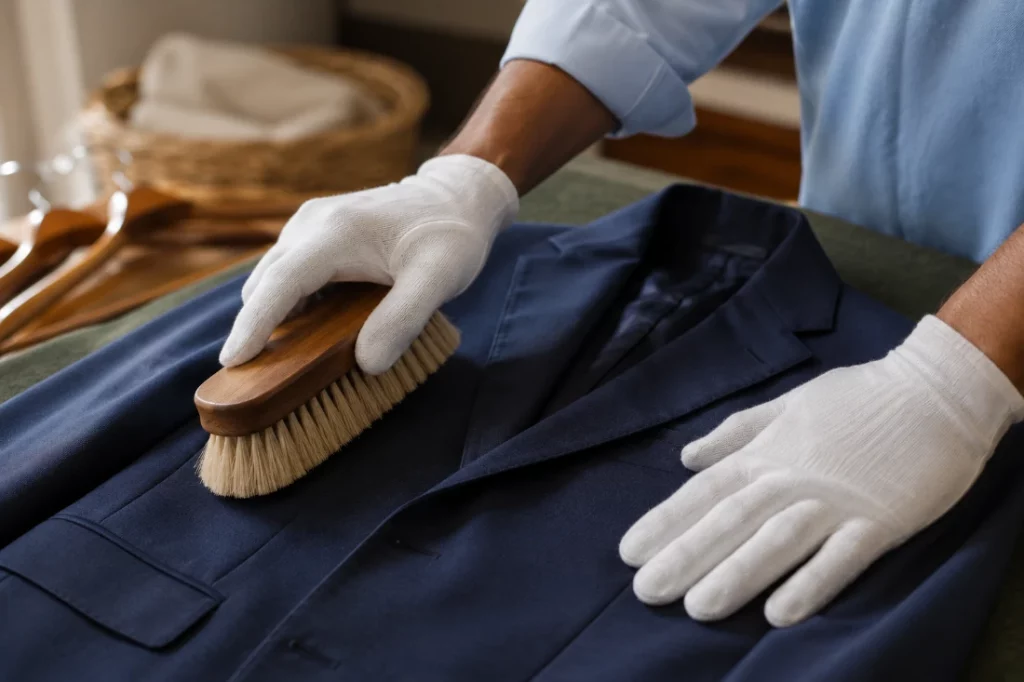
The biggest mistake in Bangkok suit care is over-cleaning. Dry cleaning is harsh on wool fibers, strips natural lanolin, and uses chemicals that accelerate fabric degradation. A bespoke suit should be dry cleaned no more than once or twice per year, and only when truly necessary. Most Bangkok suit care happens through brushing, airing, and steaming rather than chemical cleaning.
After Each Wear
- Empty all pockets immediately to prevent permanent shape distortion
- Hang the suit outside the closet for 2-4 hours in a ventilated area
- Brush gently with a natural boar-bristle clothing brush, brushing downward along the grain to remove dust and surface debris
- Inspect for stains; spot-clean immediately with a damp cloth and let air dry before storage
- Return to the closet only when the fabric is fully dry and cool to the touch
Monthly Maintenance
- Steam the suit using a clothing steamer (no direct iron contact) to release wrinkles and freshen the fabric
- Check linings for any visible moisture or discoloration
- Rotate hanging positions in the closet so the same suits do not always sit in the same spot
- Empty and refill silica gel packs and check the dehumidifier reservoir
- Inspect for early signs of moth or silverfish damage
Annual or Biannual
- Dry clean only once per year for daily-wear suits, less often for occasional-wear pieces
- Choose a specialist dry cleaner familiar with bespoke construction. Bangkok options include Pickwick, Pressto, and the in-house services at certain five-star hotels
- Have your tailor inspect for any structural issues: separating canvas, weakening buttons, lining tears
- Schedule any minor alterations needed for body changes during the same visit
- Replace cedar blocks and lavender sachets at the start of the rainy season (May)
Travel Care: Packing and Unpacking a Bespoke Suit in Bangkok
If you bought a bespoke suit in Bangkok and are flying home, or if you are an expat traveling regularly for work, proper packing matters enormously. The goal is to minimize creasing during transit and to allow the suit to recover quickly on arrival.
Folding technique: turn one shoulder inside out and tuck the other shoulder into it, creating a folded suit that lies flat. This is the technique used by garment industry travelers and minimizes deep creasing. Lay the folded jacket flat in a suit carrier or at the top of a hard-sided suitcase.
On arrival in Bangkok: hang the suit immediately in a well-ventilated space (not in a sealed hotel garment bag). Most creases will fall out within 12 to 24 hours of hanging in Bangkok’s warm humid air. For deeper creases, hang the suit in a steamy bathroom (run a hot shower with the door closed for 10 minutes) or use a portable steamer.
Long-haul flights from Bangkok: wear your bulkiest or most-creased suit on the flight rather than packing it. Most of the suits in the best Bangkok climate fabrics guide also perform well as travel suits because of their natural crease recovery.
⚠️ Common Bangkok Suit Care Mistakes
Storing in Plastic Garment Bags
The single most damaging mistake in Bangkok suit care. Plastic traps humidity against the fabric and creates ideal mildew conditions. Remove plastic immediately on return from any dry cleaner.
Dry Cleaning Too Frequently
Dry cleaning every wear, every month, or even quarterly will degrade a bespoke suit within 3-5 years. Wool naturally cleans itself with airing and brushing. Reserve chemical cleaning for actual stains or once-yearly refresh.
Wearing the Same Suit Daily
A wool suit needs 24-48 hours to recover from a single wear in Bangkok’s climate. Daily wear of the same suit compresses the wool fibers and accelerates wear. Build a rotation of at least three suits for daily wear.
Ironing Directly on the Fabric
Direct iron contact with wool creates permanent shine and flattens the fabric’s natural texture. Always use a pressing cloth between iron and fabric, or use a steamer instead. Many Bangkok bespoke suits use canvassed construction that direct heat can damage permanently.
Ignoring Lining Discoloration
Yellowing or spotting on a jacket lining is an early warning sign of mildew or perspiration damage. Address it immediately by airing the jacket thoroughly, spot-cleaning with a damp cloth, and reviewing your storage setup. Ignored, lining damage spreads to the outer fabric.
When to Take Your Suit to a Bangkok Tailor for Service
Even with excellent Bangkok suit care, every bespoke suit eventually needs professional attention. The advantage of buying bespoke in Bangkok is that the tailor who made the suit can also maintain it indefinitely. Bring your suit back for professional service when you notice:
- Loose stitching or buttons. Quick fixes that prevent larger structural problems.
- Lining tears or weakening seams. Worth addressing before the outer fabric is affected.
- Weight change of 4kg or more. Bespoke construction allows for alteration within reasonable ranges, but extreme changes may require recutting.
- Visible canvas movement or “bubbling” through the front panel. Particularly common in budget tailoring; quality bespoke can be reset.
- Color fading on shoulders or chest. Indicates UV damage from sun exposure during commute or sitting near windows. Cannot be reversed but can be slowed.
- Annual general inspection. Most quality Bangkok tailors will happily inspect and steam a suit they made at no cost, particularly for returning clients.
Many of the shops in our 30 best tailors in Bangkok guide offer free lifetime alterations on suits they made, which is one of the strongest arguments for commissioning bespoke locally rather than abroad. For understanding which structural features make a suit easier to maintain over time, the anatomy of a bespoke suit covers canvas, lining, and seam construction in detail.
Frequently Asked Questions: Bangkok Suit Care
Practical answers for protecting a bespoke suit in Bangkok’s tropical climate
For daily-wear suits, dry clean once per year at most. For occasional-wear pieces (weddings, special events), dry clean only when visibly soiled, which could mean every two or three years. Excessive dry cleaning is the most common Bangkok suit care mistake and the leading cause of premature suit aging.
Between dry cleanings, brushing, airing, and steaming handle 95% of routine maintenance.
For any wardrobe holding more than two or three bespoke suits, yes. Bangkok’s average humidity sits 20-30 percentage points above ideal storage humidity for wool. Without active dehumidification or moisture absorbers, mildew risk is genuine, especially during rainy season (May-October).
A small electric dehumidifier (500ml-1L capacity, roughly 1,500-3,500 THB) is the easiest solution. For smaller wardrobes, calcium chloride moisture absorbers (sold in supermarkets across Bangkok) work effectively.
Use a natural boar-bristle clothing brush (synthetic bristles can create static and damage fine fabrics). Brush in downward strokes following the grain of the fabric, from shoulder to hem and from waistband to cuff. Brush the back, front, sleeves, and trousers separately. Pay particular attention to the shoulders and collar where dust accumulates fastest.
A proper brushing should take 3-5 minutes per suit and is the most effective tool in your Bangkok suit care routine.
No. Vacuum sealing crushes wool fibers and traps any moisture present at the time of sealing. The compressed creases that form during vacuum storage may never fully release. For long-term storage during travel or season-change, use a breathable cotton garment bag with cedar blocks inside.
If you must store suits for several months, hang them in a climate-controlled closet with active dehumidification rather than sealing them.
For mild mildew (light grey spots, no visible texture change), brush the affected area outdoors in direct sunlight for 30 minutes, then have the suit professionally dry cleaned. The UV from sunlight kills mold spores; dry cleaning removes residue.
For severe mildew (dark spotting, musty smell, fabric texture change), bring the suit to your tailor before the dry cleaner. Some severe cases require partial reconstruction of the affected lining or panel.
After. The fall and winter (November-February) are Bangkok’s least humid period and the best time to bring suits in for annual dry cleaning. Storing a suit through rainy season after dry cleaning is risky because the chemicals used can absorb humidity, and you also have less time to inspect for any cleaning damage before wearing.
The October-November window after rainy season ends is the optimal dry cleaning slot for most Bangkok wardrobes.
Generally yes, because walk-ins have better natural air circulation and easier dehumidifier placement. However, the storage quality matters more than the storage type. A well-managed traditional wardrobe with breathing room, a dehumidifier, and cedar blocks will outperform a poorly managed walk-in closet packed too tightly.
If you are renting in Bangkok and have a built-in closet, focus on (1) leaving the door cracked open for daily ventilation, (2) installing a small dehumidifier, and (3) maintaining 3cm minimum spacing between hangers.
Absolutely. Free lifetime alterations are one of the strongest arguments for commissioning bespoke in Bangkok rather than abroad. Even with the best Bangkok suit care, body changes and fabric stretching mean most suits need adjustment every 18-24 months. Being able to walk into the same shop indefinitely without charge is significant ongoing value.
Most of the shops featured in the 30 best tailors in Bangkok guide offer this service. Confirm policy details at the time of commissioning.
Need Tailor Care or a New Commission?
Whether you need a tailor for alterations, restoration, or a new bespoke commission, our verified directory covers the shops with the deepest expertise in Bangkok’s climate.
Explore the 30 Best Tailors in Bangkok →Good Bangkok suit care is mostly about doing fewer things, but doing them consistently. A well-stored suit in Bangkok’s climate can outlast suits in cooler climates because daily wear damage is minimized when proper rest and ventilation are built into the routine. For complementary reading, the best Bangkok climate fabrics covers selection at the buying stage, and the complete suit fabric guide covers the broader fabric universe.
For travelers visiting Bangkok specifically to commission a suit, the Bangkok tailoring trip planner handles trip logistics, and the first-timer’s guide covers what to expect at consultation. For everything related to the construction quality that determines how well a suit responds to care, the anatomy of a bespoke suit and the Bangkok tailoring glossary build the vocabulary you need. As Permanent Style’s suit care research outlines, the relationship between storage, brushing frequency, and rest cycles is what ultimately determines whether a fine suit lasts five years or twenty-five.
Pierre Blake
Bangkok-based tailoring reviewer
I visit and commission work from bespoke tailors across Bangkok for the ranked guides on this site. Every shop is visited in person.
Read the full author profile →