Best Suit Fabric: Complete Guide to Wool, Linen, Cotton, and Blends (2026)
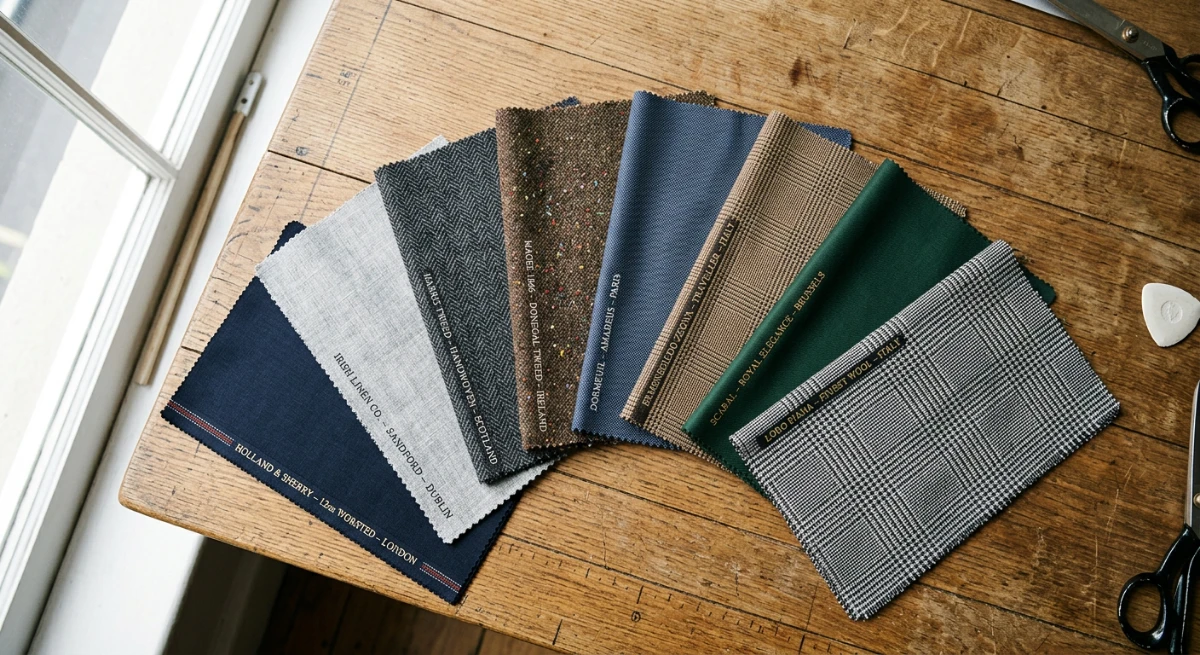
Choosing the best suit fabric is arguably more important than choosing your tailor. The fabric determines how your suit feels against your skin, how it drapes on your body, how it handles humidity and wrinkles, and how long it lasts. Yet most buyers focus on color and price while overlooking the best suit fabric characteristics that actually determine daily performance.
This guide covers every major suit fabric type, when to choose each one, and how climate, occasion, and lifestyle should drive your decision. For a specific breakdown of wool grades (Super 100s, 120s, 150s), see the detailed guide to wool numbers.
The Major Suit Fabric Types
Worsted Wool: The Best Suit Fabric Foundation
Worsted wool is the default best suit fabric for professional clothing. Made from long-staple wool fibers combed parallel before spinning, it produces a smooth, durable fabric that holds its shape through long days and travels well. Super 100s to 130s worsted wool covers the vast majority of business suits worldwide. As the worsted wool production process demonstrates, the combing and spinning technique is what gives this fabric its signature smooth finish and durability.
Best for: Business suits, year-round professional wear, first custom suits. Climate: Works in all climates when matched to appropriate weight (lightweight for tropical, mid-weight for temperate, heavier for cold). Durability: Excellent, particularly at Super 100s to 120s. Wrinkle resistance: Good, especially in high-twist constructions.
Tropical Wool: The Best Suit Fabric for Hot Climates
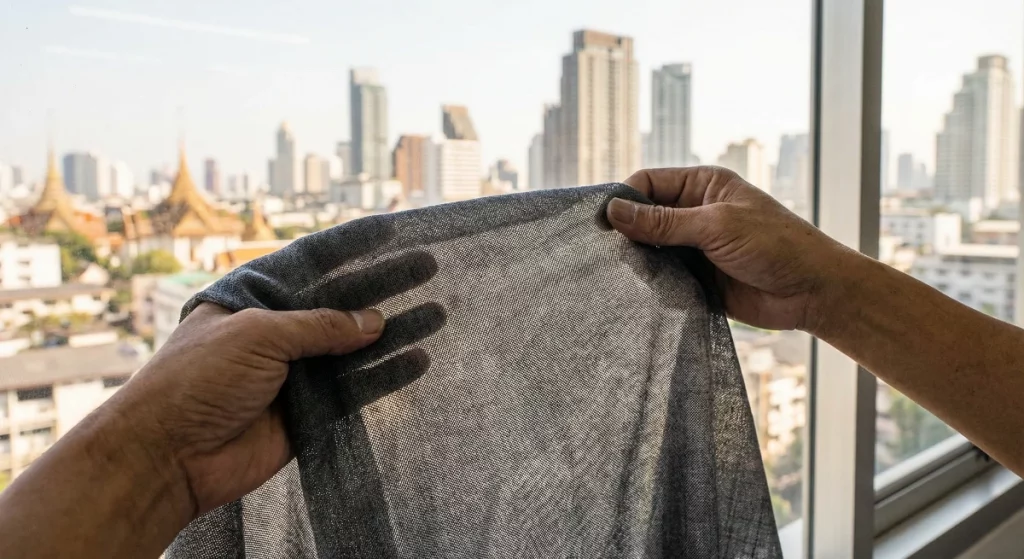
Tropical wool is worsted wool woven at a lighter weight (typically 210 to 250 g/m versus 270 to 320 g/m for standard weight). High-twist yarns are often used to improve wrinkle recovery in humid conditions. If you are commissioning a suit for Bangkok’s climate or any tropical destination, this is the best suit fabric choice for daily wear.
Best for: Bangkok, Singapore, Dubai, summer suits in temperate climates. Durability: Good (lighter fabric wears slightly faster than heavier weights). Key feature: Breathability without sacrificing structure. The top Sukhumvit tailors carry extensive tropical wool selections from Italian mills specifically chosen for Bangkok’s conditions.
Linen: The Summer Specialist
Pure linen is the most breathable suiting fabric and the coolest to wear in heat. It absorbs moisture efficiently and dries quickly. The tradeoff: linen wrinkles aggressively. A linen suit will look rumpled by noon regardless of how carefully you pressed it. Some people embrace this as the fabric’s character. Others find it frustrating.
Best for: Summer suits, beach weddings, casual Mediterranean style. Not recommended for: Formal business environments, photography-heavy events (wrinkles show in photos). Compromise: Linen-wool blends (60/40 or 50/50) offer linen’s breathability with better wrinkle resistance.
Cotton: The Casual Professional
Cotton suits occupy the space between casual and formal. They are cooler than wool and more structured than linen, making them excellent for smart-casual environments. Cotton wrinkles more than wool but less than linen.
Best for: Business casual, spring/summer, creative industries. Fabric types: Chino cloth (for custom chinos and casual trousers), brushed cotton for winter, pique for texture. Durability: Moderate. Cotton suits show wear faster than wool at stress points.
Mohair Blends: The Evening Performer
Mohair (from Angora goats) blended with wool creates a fabric with a natural sheen, excellent wrinkle resistance, and a cool, smooth hand-feel. It is one of the best suit fabric choices for evening wear and tuxedos because the sheen catches artificial light beautifully.
Best for: Dinner jackets, formal evening suits, tropical business suits. Blend ratio: 10 to 30 percent mohair with wool provides the best balance. Key feature: Natural sheen without the synthetic look of cheaper alternatives.
Silk-Wool Blends: Luxury with Substance
Adding silk to wool creates a fabric with increased luster, softer drape, and a luxurious hand-feel. Silk-wool blends photograph exceptionally well, making them popular for weddings and high-profile events.
Best for: Wedding suits, special occasion wear, executive presentations. Blend ratio: 5 to 15 percent silk with wool adds luxury without compromising durability. Caution: Higher silk content (30%+) reduces durability significantly. For wedding-specific fabric advice, see the wedding suit Bangkok guide.
Hopsack and Fresco: The Breathability Champions
These open-weave fabrics maximize airflow, making them ideal for unstructured blazers and sport coats. Hopsack has a basket-weave texture. Fresco is a high-twist open weave with remarkable crease recovery. Both sacrifice some formality for exceptional comfort in heat.
Best for: Casual summer blazers, Bangkok daytime wear, business casual. Not recommended for: Formal business suits, winter wear. The tailoring glossary defines these and dozens more fabric terms.
How to Choose the Best Suit Fabric for Your Needs
| Your Situation | Best Suit Fabric | Why |
|---|---|---|
| First business suit, temperate climate | Super 110s to 120s worsted wool | Most versatile, durable, year-round appropriate |
| Bangkok daily wear | Tropical-weight high-twist wool | Breathable, wrinkle-resistant, maintains structure in humidity |
| Wedding (outdoor, tropical) | Lightweight wool or wool-silk blend | Photographs well, comfortable in heat, elegant drape |
| Wedding (indoor, formal) | Super 140s to 150s or wool-mohair | Luxurious feel, natural sheen under indoor lighting |
| Summer casual | Linen or linen-wool blend | Maximum breathability, relaxed aesthetic |
| Evening / black tie | Wool-mohair blend | Natural sheen, wrinkle resistance, cool feel |
| Frequent traveler | High-twist Super 110s to 120s | Best wrinkle recovery, packs well, durable |
For pricing at each fabric tier, the Bangkok tailor price guide shows what to expect. For construction quality that matches your best suit fabric choice, the anatomy of a bespoke suit explains how canvas, lining, and hand-finishing interact with fabric to determine the finished result.
The best Bangkok tailors source directly from Italian and British mills whose finishing processes transform raw wool into exceptional cloth. When evaluating tailors, ask which mills they carry, it is one of the strongest quality indicators. The 30 best tailors in Bangkok guide notes mill partnerships for every ranked shop.
For advice on pairing your chosen best suit fabric with the right shirts and tie combinations, those guides cover the color theory and texture principles that make everything work together.

Pierre Blake
Bangkok-based tailoring reviewer
I visit and commission work from bespoke tailors across Bangkok for the ranked guides on this site. Every shop is visited in person.
Read the full author profile →