Bangkok Tailor Interview: Master Tailor Tips & Secrets from Bangkok’s Best Craftsmen
What separates a suit that turns heads in a boardroom from one that just hangs on your shoulders? The answer, according to decades of Bangkok tailor interview sessions with the city’s most celebrated craftsmen, is almost never the fabric alone. It is knowledge — accumulated over generations, refined through thousands of fittings, and rarely written down anywhere. This guide pulls back the curtain on those hard-won secrets, translating conversations with Bangkok’s finest tailors into actionable insight for anyone serious about bespoke clothing.
Whether you are a first-time visitor stepping into a Sukhumvit shophouse for the first time or a seasoned traveller who has been commissioning made-to-measure garments for years, the wisdom gathered in these pages will permanently change the way you think about custom clothing. Consider this your definitive Bangkok tailor interview in editorial form.
Why Bangkok Remains the World Capital of Bespoke Value
Before diving into technique, it is worth pausing on the question every international client asks: why Bangkok? The honest Bangkok tailor interview answer is threefold — heritage, competition, and access to extraordinary textiles. Thailand has maintained an unbroken tradition of fine hand-sewing stretching back well over a century. Tailoring families on streets like Sukhumvit and Silom pass skills from parent to child the same way a chef might pass down a mother sauce recipe.
That heritage exists inside a fiercely competitive market. Unlike high streets in London or Milan where the sheer cost of real estate keeps competition manageable, Bangkok’s tailoring districts house dozens of shops within a single city block. That pressure keeps quality relentlessly high and prices honest. Combine this with proximity to the world’s finest suiting mills in Huddersfield, Biella, and Osaka — all of whose fabrics flow through Bangkok’s wholesale merchants — and you have a perfect ecosystem for remarkable clothing at a fraction of Western prices.
If you want to find the right workshop before a single stitch is cut, start with our comprehensive 30 Best Tailors in Bangkok guide, which maps the landscape from entry-level shops to true artisan ateliers.
Bangkok Tailor Interview Insight #1: The Consultation Is the Most Important Fitting
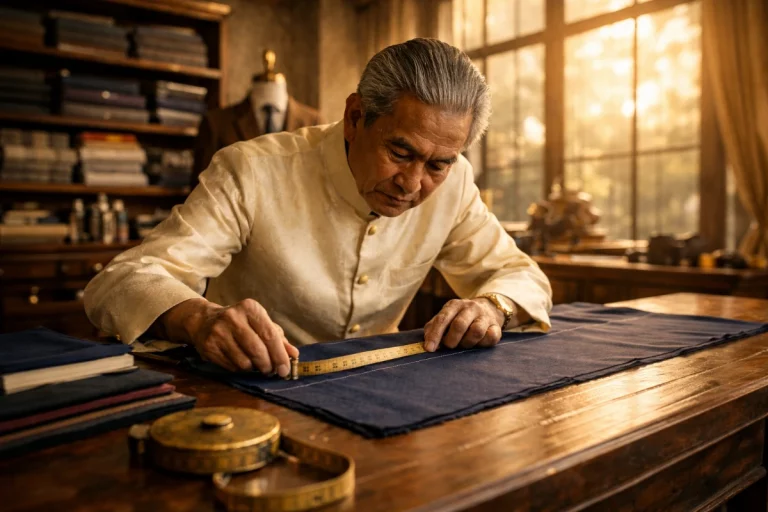
Every Bangkok tailor interview we have conducted returns to the same opening wisdom: the first conversation between client and craftsman is more important than any pin, chalk mark, or measurement. “I can adjust fabric,” one veteran tailor with forty years of experience explained. “I cannot adjust what a customer has already decided in their head.” What he meant was this — a skilled tailor needs to understand your life before they can dress your body.
Where will you wear this suit? What climate will you be in? Do you spend most of your day seated in meetings or moving between venues? Do you want a jacket that looks powerful across a conference table or one that still looks elegant when you remove it to reveal the shirt beneath? These are not upselling questions. They are architectural ones. The answers determine canvas weight, shoulder construction, lining choice, and even the number of buttons on a sleeve.
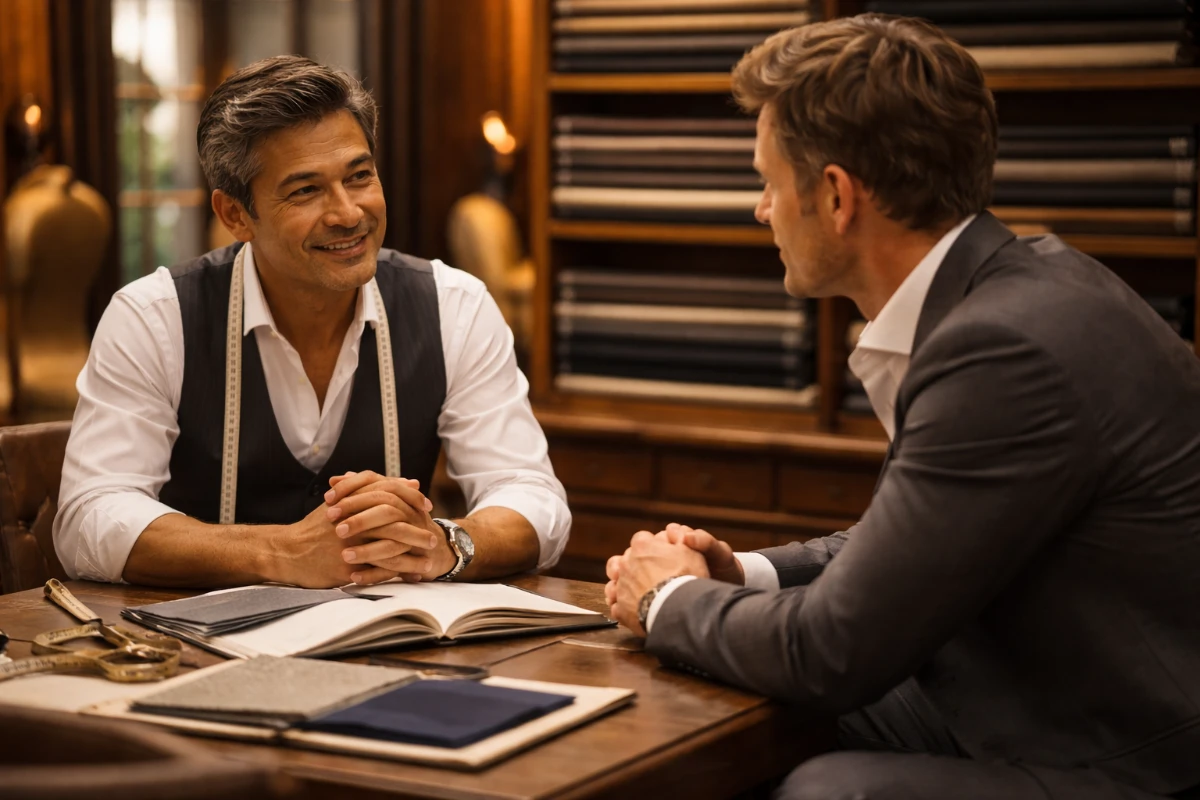
The best craftsmen, as any thorough Bangkok tailor interview will reveal, are listening far more than they are talking during those first fifteen minutes. Watch for this quality when you visit. A tailor who immediately starts showing you fabric books before asking a single question about your life is a tailor who is selling, not crafting.
Fabric Intelligence: What the Best Tailors Know That You Don’t
The single most consistent theme across every Bangkok tailor interview conducted for this piece was frustration — polite, professional frustration — with clients who fixate on thread count and brand name while ignoring the variables that actually determine how a suit will wear over time.
Super Numbers Are Not the Whole Story
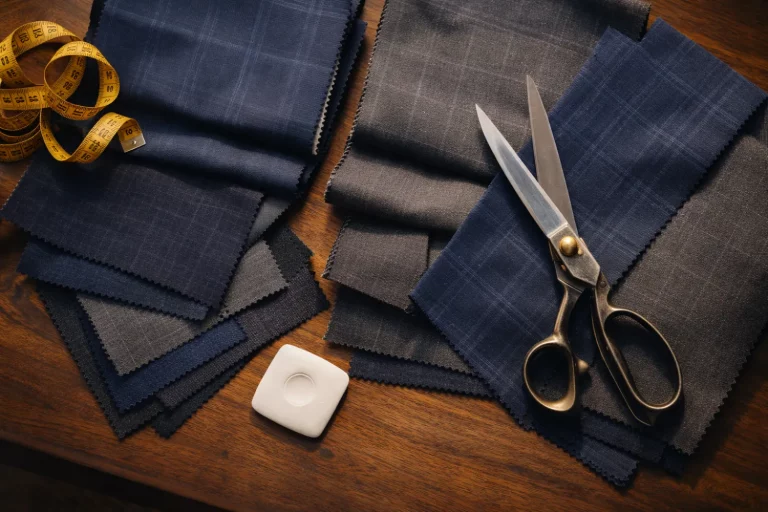
The “Super” designation on a fabric — Super 100s, Super 150s, Super 180s — refers to the fineness of the wool fibre measured in microns. Higher numbers mean finer fibres, which produce a silkier hand feel and a lustrous drape. They also mean less durability. A Super 180s cloth worn daily will show wear in under a year. A well-chosen Super 110s or Super 120s from a reputable mill like Loro Piana, Scabal, or Vitale Barberis Canonico will look immaculate for a decade with proper care.
As one master cutter explained during a particularly illuminating Bangkok tailor interview session: “The most expensive cloth is not always the best cloth for your suit. The best cloth is the one that fits your life.” A traveller who lives out of a suitcase needs a tightly-woven, high-twist fabric that resists creasing. An executive whose suit lives on a hanger in a climate-controlled office can afford the indulgence of a gossamer-light cloth.
Lining: The Invisible Signature
Clients rarely ask about lining. Tailors notice it immediately. The choice of lining communicates everything about a workshop’s standards. Cheap polyester lining causes a jacket to cling, creates static, and deteriorates rapidly. Bemberg (cupro) lining, derived from cotton linter, breathes like silk and slides effortlessly over a shirt. True silk lining is the luxury pinnacle — cool against the skin, extraordinarily light, and beautiful when the jacket is open.
Ask to see the lining fabric held up to light. A quality lining will be even, consistent, and have a subtle natural lustre. If it looks plastic, it will wear plastic. This is the kind of detail that separates the workshops featured in our Best Tailors on Sukhumvit complete guide from the tourist traps a few doors down.
Bangkok Tailor Interview Insight #2: Your Posture Is Not What You Think It Is
This is the secret that surprises clients most when it surfaces in a Bangkok tailor interview — your natural posture when standing in front of a mirror is not your real posture. The moment most people stand before a tailor, they pull their shoulders back, elongate their spine, and project a slightly more heroic version of themselves. The suit gets cut for that person. The real person — slightly forward in the left shoulder, carrying weight on one hip from years of carrying a bag, with a neck that tilts three degrees to the right — never gets properly addressed.
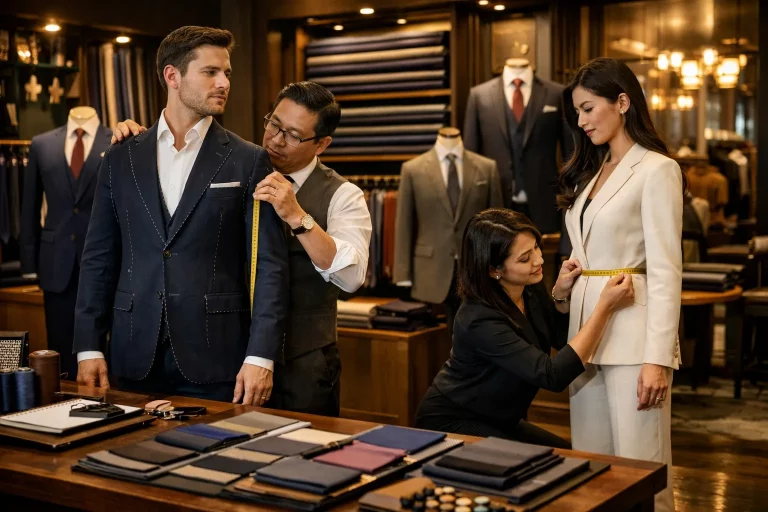
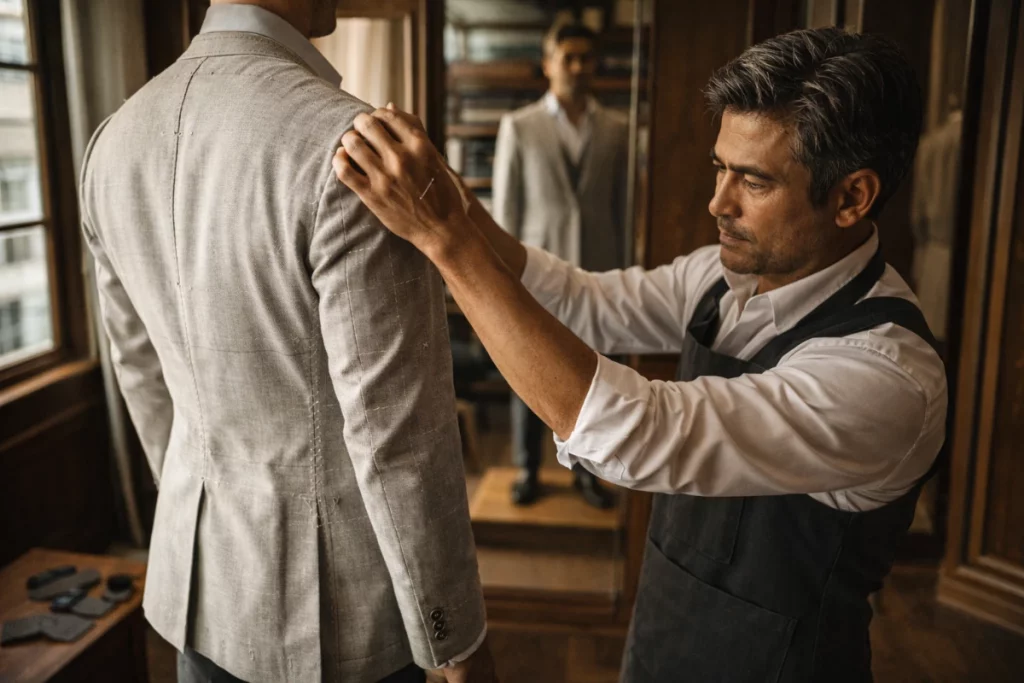
The best Bangkok tailors are students of posture. They will watch you walk into the shop. They will watch how you sit down when offered a chair. They will note the way you hold your phone and which hand you extend first. All of this feeds into the measurements. Adjustments for a high left shoulder, a sway back, or a prominent seat are not abnormalities — they are simply the topography of a real human body, and good bespoke tailoring exists to accommodate them invisibly.
For a broader understanding of how this consultation process works across different garment types, our Bangkok Tailored Clothing guide walks through everything from shirts and trousers to full wedding ensembles.
The Construction Secrets That Create Longevity
Canvas vs. Fusing: A Fundamental Divide
The chest of a jacket must hold its shape while remaining responsive and alive. There are two ways to achieve this. Fusing bonds a stiff interlining directly to the jacket’s face fabric using heat and adhesive — it is fast, inexpensive, and produces a result that feels slightly board-like. Over time and with dry cleaning, fusing can bubble and separate, creating an irreparable rippling effect across the chest.
Full canvas construction uses a floating layer of horsehair and linen canvas that is hand-stitched in place. This canvas molds to the wearer’s body over months of wear, creating a fit that becomes more personal over time. It breathes. It moves. It recovers its shape. During any serious Bangkok tailor interview, this distinction will surface almost immediately. Ask specifically: “Is this jacket full canvas, half canvas, or fused?” The answer tells you everything about where the shop’s priorities lie.
Hand-Stitching: Where Time Becomes Value
Every stitch added by hand rather than machine adds cost and time. It also adds quality that a trained eye can read across a room. Pick stitching along lapel edges, hand-padded lapel roll, pick-stitched buttonholes, and hand-sewn sleeve attachment all contribute to a jacket’s ability to drape, move, and age gracefully. These are not decorative flourishes — they are structural investments.
When Sir Paul Smith was asked about the markers of a truly great suit in his widely cited GQ tailor interview, he returned repeatedly to the role of hand work — the irreplaceable human element that no machine can fully replicate. Bangkok’s best craftsmen share this conviction entirely.
Bangkok Tailor Interview Insight #3: The Fitting Process Has a Rhythm — Don’t Rush It
The most common mistake visitors make — and one that every Bangkok tailor interview subject raised without prompting — is treating a bespoke suit like a ready-to-wear purchase with a slightly longer wait time. Bespoke tailoring has a rhythm. It requires at least two fittings, ideally three. Each fitting serves a different purpose.
The first fitting (the “baste” or “forward fitting”) is done in unfinished fabric with the garment loosely assembled. This is the structural checkpoint — does the shoulder sit correctly? Is the balance right? Is the chest opening where it should be? Nothing is permanent at this stage.
The second fitting refines what the first revealed. By now the canvas is in, the lining is being prepared, and the jacket begins to look like a real garment. Minor adjustments to suppression, sleeve pitch, and collar gap are made.
The final fitting should require almost nothing. A tuck here, a button moved a centimetre — if the preceding fittings were done correctly, the third is a formality and a celebration. Any shop promising perfection in a single fitting and forty-eight hours is either extremely experienced with your specific body type or cutting corners somewhere. A genuine Bangkok tailor interview will always result in a craftsman advocating for more time, not less.
Shirt Secrets That Most Clients Never Learn
A Bangkok tailor interview focused solely on shirts would run for hours — the craft is that deep. But several secrets rise above the rest in terms of impact.
Collar Architecture
The collar is the frame for your face. Too tight and it creates visible neck strain and marks. Too loose and it gaps away from the shirt when you turn your head. Too wide a spread and it can visually broaden a narrow jaw. Too narrow a point and it can look outdated within a season. A skilled shirt-maker will measure not just your neck circumference but the slope of your neck, the width of your jaw, and ask about the tie knots you habitually use before proposing a collar style.
Cuff Length and the Shirt-to-Jacket Relationship
The cardinal rule: shirt cuff must show below the jacket sleeve. The amount — traditionally between 1.5 and 2 centimetres — is a style choice, but the principle is absolute. This means your shirt and jacket must be commissioned and measured in relationship to each other, ideally at the same time. This is why the best Bangkok ateliers encourage clients to wear or bring their suit jacket when commissioning shirts.
Mother-of-Pearl vs. Plastic Buttons
Run your thumbnail across a button. Mother-of-pearl has a cool, slightly rough surface and a depth of colour that shifts in different lights. Plastic buttons are uniformly smooth and flat-looking. Mother-of-pearl buttons chip if dropped on hard floors, but they elevate the entire character of a shirt. On a properly made bespoke shirt, they are non-negotiable.
Bangkok Tailor Interview Insight #4: Care Determines Longevity More Than Construction
Perhaps the most under-discussed insight from any Bangkok tailor interview is that the most exquisitely constructed suit can be destroyed by poor aftercare, while a modestly made garment can last decades under a disciplined routine.
The rules, as every master tailor repeats: never hang a suit immediately after wearing it — allow body heat and moisture to dissipate on a chair for fifteen to twenty minutes first. Use wooden suit hangers with a shoulder width that mirrors the jacket’s own shoulder — wire hangers distort the chest over time. Brush the jacket with a soft-bristle garment brush after each wear to lift surface dust before it works into the fibres. Dry clean as infrequently as possible; the solvents are hard on natural fibres. Rotate between at least three suits if wearing tailored clothing regularly.
And invest in cedar shoe trees alongside your suits. The aromatic cedar controls humidity inside the wardrobe, which protects wool from the moisture that ultimately invites moths.
How to Read a Tailor’s Workshop Before You Sit Down
Every Bangkok tailor interview surfaces a quiet confidence among the best craftsmen — a calm certainty that their work speaks before they do. You can read the same signals in a workshop before a single word is exchanged.
Look for: a pressing iron and ironing board visibly in use, because constant pressing during construction is the mark of professional technique. Look for finished garments on hangers rather than folded on shelves — folding compresses construction. Look for a cutting table with a large, uncluttered surface; precision cutting requires space. Listen for the sound of hand-sewing — a gentle, rhythmic pulling of thread — rather than constant machine noise.
Most importantly, look at the tailor’s own clothing. A craftsman who dresses carelessly is a craftsman who has stopped caring about the details. The masters who surface repeatedly in every credible Bangkok tailor interview are almost always impeccably turned out themselves.
Bangkok Tailor Interview Insight #5: Communicate in Reference Points, Not Abstract Words
Words like “slim,” “classic,” “modern,” and “relaxed” mean radically different things to different people across different cultures. This communication gap is, according to nearly every Bangkok tailor interview subject, the single largest source of client disappointment — not craftsmanship.
Bring photographs. Bring a suit you already love, even if it needs alterations. Point to images on your phone — the shoulder on this jacket, the lapel width on that one, the trouser break in this photograph. Visual references create a shared language that transcends interpretation. The best craftsmen keep lookbooks precisely because they understand that their vocabulary and a client’s vocabulary may share words without sharing meaning.
This is especially true when commissioning across cultures. A Bangkok tailor interview with craftsmen who work primarily with international clients consistently reveals that the most satisfied customers are those who arrived with images and left with questions answered, not the ones who described their vision exclusively in words and trusted it had landed correctly.
Special Occasions and the Art of the Statement Garment
Wedding suits, event wear, and statement pieces occupy a special territory in the Bangkok tailor interview conversation. Here, the rules of office restraint dissolve and genuine creativity is invited.
Bangkok’s finest ateliers maintain stunning collections of jacketing and coating fabrics — velvets, jacquards, textured wools, silk blends, and printed linings — that never appear in standard suiting ranges. A wedding suit can carry a subtle jacquard in the same navy as a business suit but with a surface texture that catches candlelight differently at every angle. A dinner jacket can be built in a mid-weight silk-wool blend that behaves like suiting but photographs like luxury evening wear.
The lining of a special occasion garment is where many Bangkok tailors take their greatest creative pride. A jacket that appears entirely orthodox from the outside can, when opened, reveal a hand-painted print, a bold stripe, or even a personalised monogram woven into the fabric. These hidden signatures are the tailor’s gift to the client — a private luxury visible only to those the client chooses to share it with.
To plan a special occasion wardrobe or explore the full range of what Bangkok’s tailors offer, visit the Best Tailors in Bangkok homepage for a curated starting point.
What Every Bangkok Tailor Interview Agrees On: Patience Is the Ultimate Tool
Strip away all the technical knowledge — the canvas construction, the fabric weights, the collar geometry, the posture analysis — and the deepest truth surfacing from every Bangkok tailor interview is simpler than any of it: the best results come to those who approach bespoke tailoring with patience and curiosity rather than urgency and certainty.
A craftsman who has spent forty years perfecting a shoulder seam deserves more than a fifteen-minute consultation and a demand for next-day delivery. The relationship between a tailor and a regular client is one of the great quiet partnerships in a well-dressed life — the craftsman learns the client’s body, preferences, and lifestyle over years, and the clothing that results gets progressively more perfect with every commission.
This is not a transaction. It is a craft relationship. Approached correctly, a visit to Bangkok’s finest tailors is not an errand — it is an education. And the education, as every Bangkok tailor interview eventually reveals, never quite ends. There is always another detail to refine, another fabric to discover, another secret that has been waiting in a master’s hands for the right moment to be passed on.
Ready to Begin Your Own Bangkok Tailor Interview?
The knowledge gathered here is a foundation, not a ceiling. Every workshop visit, every fitting, every conversation with a master craftsman will add another layer. The tailors of Bangkok have been perfecting this craft for generations, and they are extraordinarily generous with their knowledge to clients who arrive with genuine curiosity.
To find the right workshop for your specific needs — whether you are visiting Sukhumvit, exploring the wider city, or commissioning remotely ahead of a trip — these resources will guide you:
- The 30 Best Tailors in Bangkok — Full City Guide
- Best Tailors on Sukhumvit — Complete Guide
- Bangkok Tailored Clothing Guide — All Garment Types
- Contact a Bangkok Tailor Expert — Get Personal Advice
The suit of your life is waiting. The craftsmen who can build it are ready. All that remains is the conversation — your very own Bangkok tailor interview — that sets everything in motion.