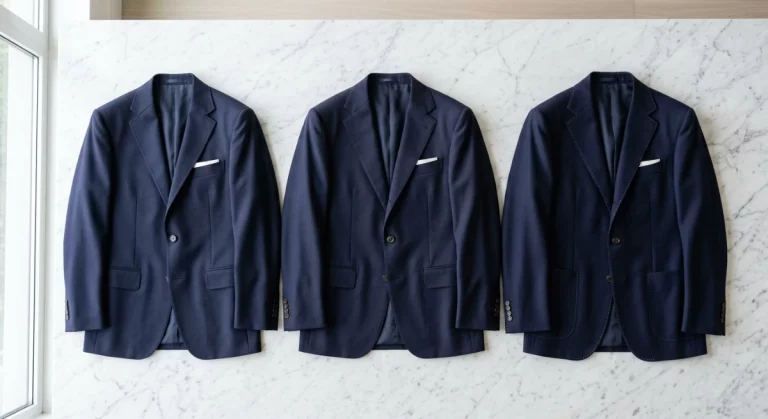
Buy a Suit in Bangkok: Ultimate First-Timer’s Guide
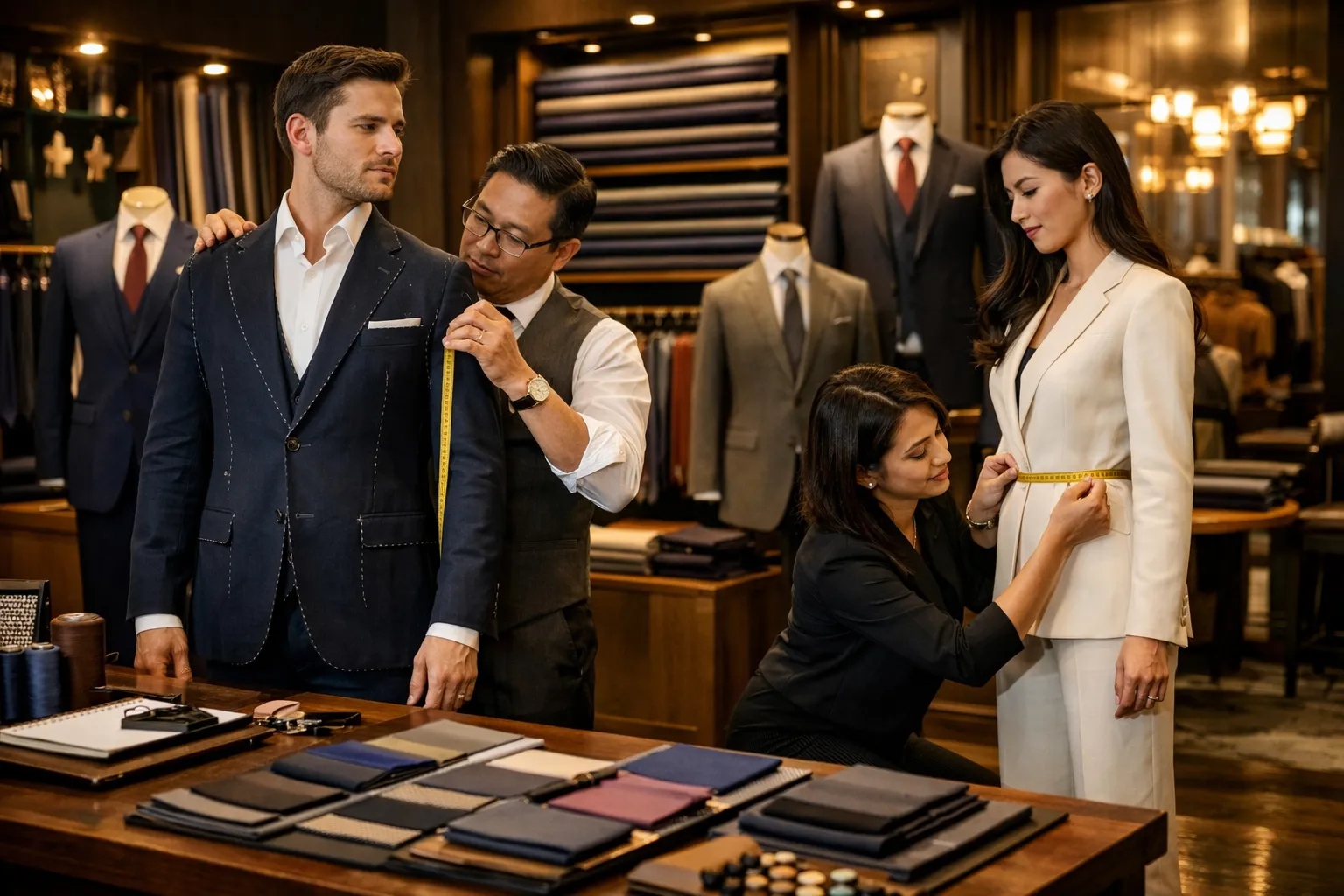
Everything you need to know to buy a suit in Bangkok with confidence, avoid common pitfalls, and walk away with exceptional tailored clothing at incredible value.
Table of Contents
The decision to buy a suit in Bangkok is one of the smartest style investments a traveler can make. The city has earned its reputation as one of the world’s premier destinations for custom tailoring, attracting everyone from business travelers needing a quick suit to wedding parties outfitting entire groups. If you have decided to buy a suit in Bangkok but feel overwhelmed by the process, this comprehensive guide will walk you through every step of the journey, from choosing the right tailor to walking out with a perfectly fitted garment that rivals anything you would find on Savile Row at a fraction of the price.
The prospect of commissioning custom clothing in a foreign country can feel intimidating, especially when you are investing hundreds or thousands of dollars in garments you will not see finished until your final fitting. However, understanding what to expect, how to communicate effectively with your tailor, and what quality markers to look for transforms this experience from anxiety-inducing to genuinely exciting. By the end of this guide, you will have the knowledge and confidence to navigate Bangkok’s tailoring scene like a seasoned customer.
Why Bangkok Has Become the World’s Custom Tailoring Capital
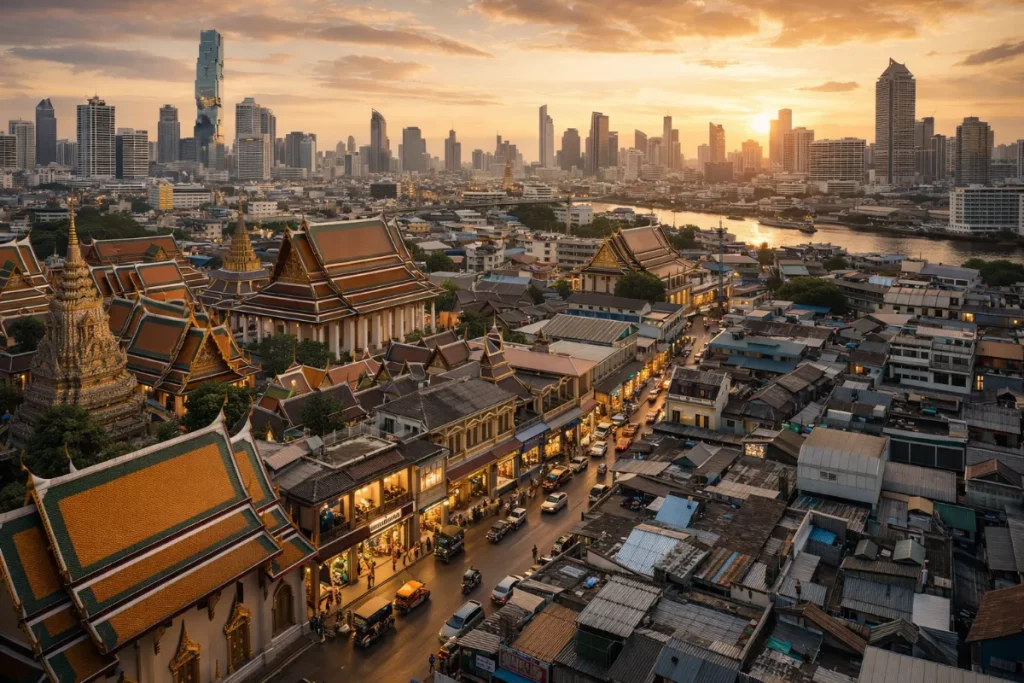
Before diving into the practical aspects of how to buy a suit in Bangkok, it helps to understand what makes this city such an exceptional tailoring destination. Bangkok’s tailoring industry did not develop overnight but rather evolved over decades as Thai craftsmen combined traditional techniques with modern business practices and an understanding of international style preferences.
The city sits at a unique intersection of several advantages that few other places can match. First, skilled labor costs in Thailand remain significantly lower than in Western countries or even other Asian tailoring hubs like Hong Kong. This does not mean the quality suffers; rather, it means you can access master tailors and hand-finishing work at prices that would be astronomical elsewhere. A suit that might cost three thousand dollars on Savile Row or two thousand in Hong Kong can often be created in Bangkok for six hundred to twelve hundred dollars with comparable quality fabrics and construction methods.
Second, Bangkok’s position as a major tourism and business hub means tailors here have extensive experience working with international clients. They understand Western body types, style preferences, and the need to complete garments within tight timeframes. Many tailors have been refining their craft for thirty or forty years, passing knowledge down through generations while staying current with contemporary fashion trends.
Third, Bangkok offers extraordinary variety in both tailoring shops and available fabrics. Whether you want a conservative business suit, a bold statement piece for a special occasion, or something perfectly balanced between traditional and modern, you will find tailors who specialize in exactly what you are looking for. The fabric selections often exceed what you would find in many Western cities, with shops carrying everything from affordable everyday wools to the finest Super 180s Italian fabrics.
Before You Arrive: Essential Preparation Steps
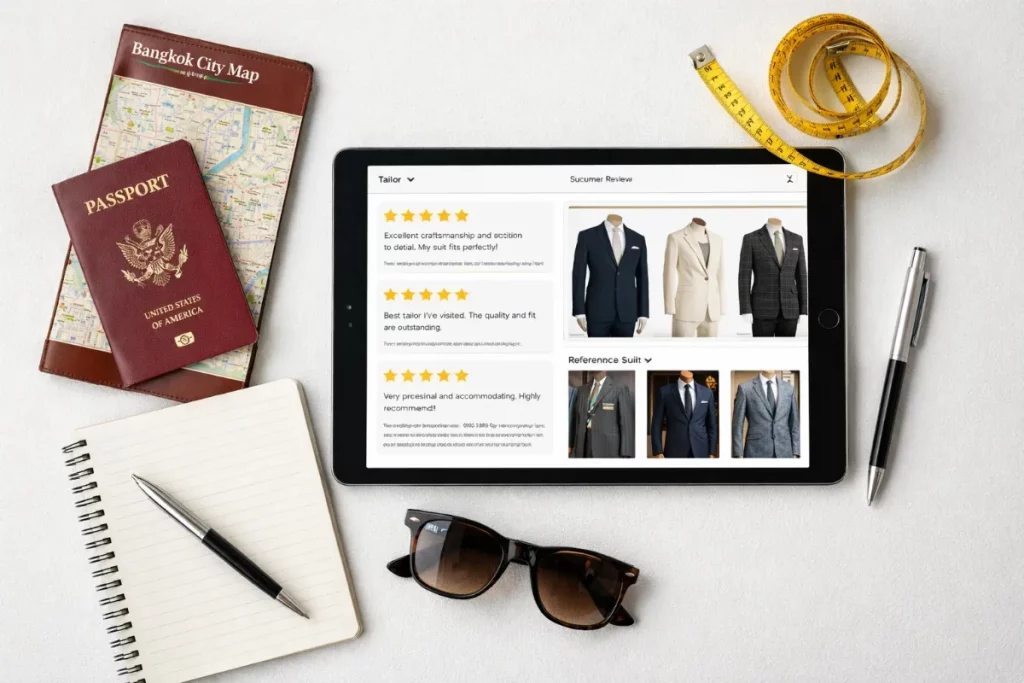
The decision to buy a suit in Bangkok ideally begins before you board your flight. While spontaneous purchases can certainly work out well, a little preparation dramatically increases your chances of a successful outcome and helps you make the most of your time in the city.
Start by researching tailors and reading detailed reviews from multiple sources. Look beyond simple star ratings to find reviews that discuss specific aspects of the experience: How did the finished garment fit? How did the tailor handle any issues that arose? What was the quality of the fabric and construction? Pay attention to reviews from people with similar needs to yours, whether that is business suits, wedding attire, or casual wear. Our guide to the 30 best tailors in Bangkok reviews every shop we have visited with real pricing, turnaround times, and construction details.
Understanding your timeline is crucial. Most quality tailors need a minimum of three days to complete a suit, with many preferring four to five days to ensure proper fitting sessions and any necessary adjustments. This typically breaks down into an initial consultation and measurement session, a first fitting after the suit is basted together, and a final fitting once the suit is complete. Some tailors offer rush services, but quality can suffer when craftsmen are pressured to work too quickly. If you are planning to buy a suit in Bangkok during a short trip, contact tailors in advance to confirm they can accommodate your schedule. The best time to visit a Bangkok tailor guide covers seasonal considerations and when to book ahead.
Consider bringing reference images that show the style you are after. Pictures from magazines, screenshots from Instagram, or photos of suits you already own and love provide invaluable guidance to your tailor. While experienced tailors can certainly make recommendations, having visual references eliminates ambiguity and helps ensure you are both working toward the same vision. This is particularly important for details like lapel width, trouser break, and overall silhouette.
Set a realistic budget before you start shopping. Bangkok tailoring spans an enormous price range, from very affordable tourist-focused shops to high-end ateliers using the finest materials and construction methods. The Bangkok tailor price guide breaks down fair pricing at each quality tier and helps you understand what to expect at your budget level. Remember to factor in not just the suit itself but also custom shirts, ties, and any additional pieces you might want.
Choosing the Right Tailor for Your Needs
When you decide to buy a suit in Bangkok, selecting the right tailor becomes your most important decision. The city hosts hundreds of tailoring shops, ranging from small family operations to large showrooms employing dozens of craftsmen. Not all tailors are created equal, and finding the right match for your specific needs and preferences requires understanding what differentiates one shop from another.
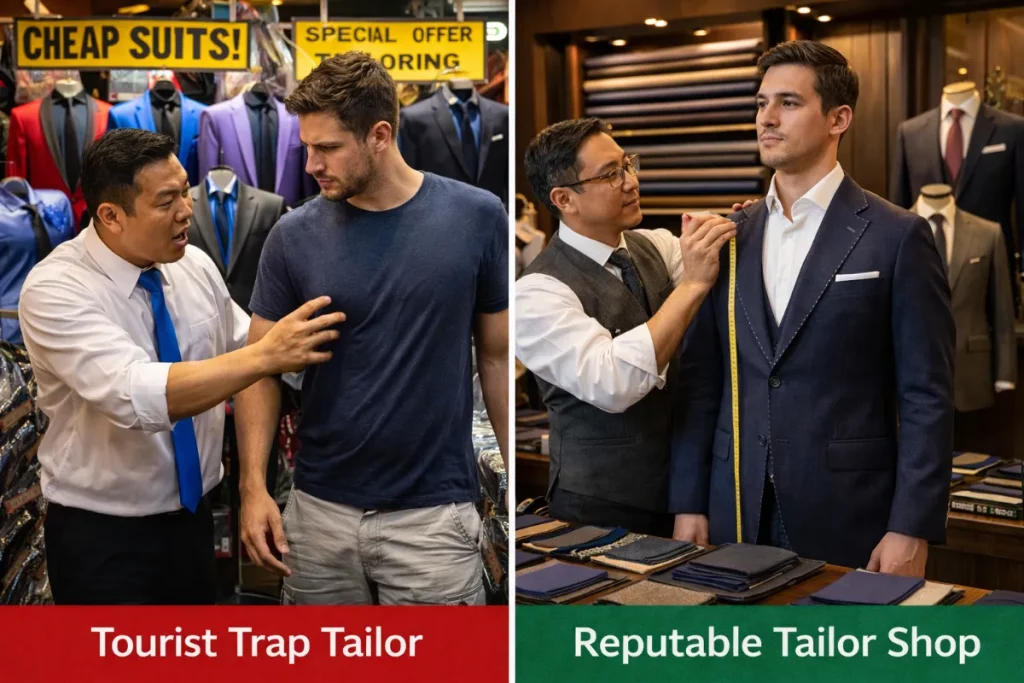
Location matters more than you might think. While it is tempting to choose a tailor far from tourist areas thinking you will get better prices, the reality is that reputable tailors in convenient locations like Sukhumvit, Silom, and Siam often provide better service because they depend on repeat business and referrals from hotels. Tourist-trap tailors, ironically, are often those offering incredibly low prices and aggressive street touting, not necessarily those in prime locations.
The shop atmosphere tells you a lot about what to expect. When you walk into a tailoring shop, observe how you are treated. Do they rush you, or do they take time to understand your needs? Is the space professional and organized, or does it feel chaotic? Look at the fabrics on display and ask to see samples of completed work. Quality tailors are proud to show their craftsmanship and will have examples of finished garments or photographs of satisfied customers.
Specialization varies significantly among Bangkok tailors. Some excel at traditional British cuts with structured shoulders and defined waists, while others specialize in softer Italian styling with natural shoulder lines and relaxed fits. Some cater primarily to business professionals needing conservative suits, while others embrace fashion-forward designs and contemporary trends. Understanding a tailor’s specialty helps ensure they can deliver the style you want rather than forcing their preferred aesthetic onto you. Shops like Signature’s Collection are known for premium craftsmanship, while Galaxy Tailor blends contemporary design with accessible pricing.
Communication ability cannot be overstated in importance. Your tailor needs to understand not just measurements but also your preferences, lifestyle needs, and any concerns you have about fit or style. The best tailors ask probing questions about where you will wear the suit, what climate you live in, whether you prefer a trim or relaxed fit, and how you want to present yourself. They listen carefully to your answers and offer suggestions based on their expertise while respecting your final decisions.
Price transparency should be established immediately. Reputable tailors provide clear pricing that breaks down the cost of fabric, construction, and any additional details like working buttonholes or hand-stitched lapels. They do not employ bait-and-switch tactics where advertised prices balloon once you are committed. When you buy a suit in Bangkok from an established tailor, you should receive a detailed quote that accounts for everything you have discussed, with no surprise charges appearing later. If something feels off about the pricing or the pressure to commit, read the Bangkok tailor scams guide before proceeding.
The Initial Consultation: Setting Expectations and Building Rapport
Your first meeting with your chosen tailor sets the foundation for everything that follows. This consultation is where you will communicate your vision, learn about options, and begin building the relationship that will guide the creation of your garment. Approaching this meeting with the right mindset and preparation makes an enormous difference in the final outcome.
When you first sit down to discuss your plan to buy a suit in Bangkok, expect your tailor to ask numerous questions. These might seem excessive initially, but each question helps the tailor understand your needs more precisely. They will ask about the occasions you will wear the suit, your climate back home, your profession, your personal style preferences, and whether you have any specific concerns about fit or comfort. Answer these questions thoroughly and honestly rather than giving brief, minimal responses.
This is the time to share any reference images you have collected and to discuss what specifically appeals to you about each example. Maybe you love the slim lapels in one photo but prefer the trouser cut in another. Perhaps you want the overall silhouette of one suit but with different buttons or pocket styles. Walking through these preferences helps your tailor understand your aesthetic sensibilities and ensures they are creating something aligned with your vision rather than simply replicating their standard patterns.
Discuss your lifestyle honestly. If you sit at a desk all day, you need different construction and fabric choices than someone who is constantly moving between meetings and standing for presentations. If you travel frequently, you want fabrics that resist wrinkling and recover well from being packed. If you live in a hot climate, you need different weights and weaves than someone in a temperate region. These practical considerations should influence fabric selection and construction details.
Do not be afraid to ask questions during this consultation. If your tailor suggests something you do not understand, ask them to explain their reasoning. If they use terminology you are unfamiliar with, request clarification. The Bangkok tailoring glossary can help you prepare for these conversations. Quality tailors appreciate engaged clients who want to understand the process rather than those who passively accept every suggestion without discussion. This is your suit, your money, and your vision being realized.
Understanding Fabric Quality and Selection
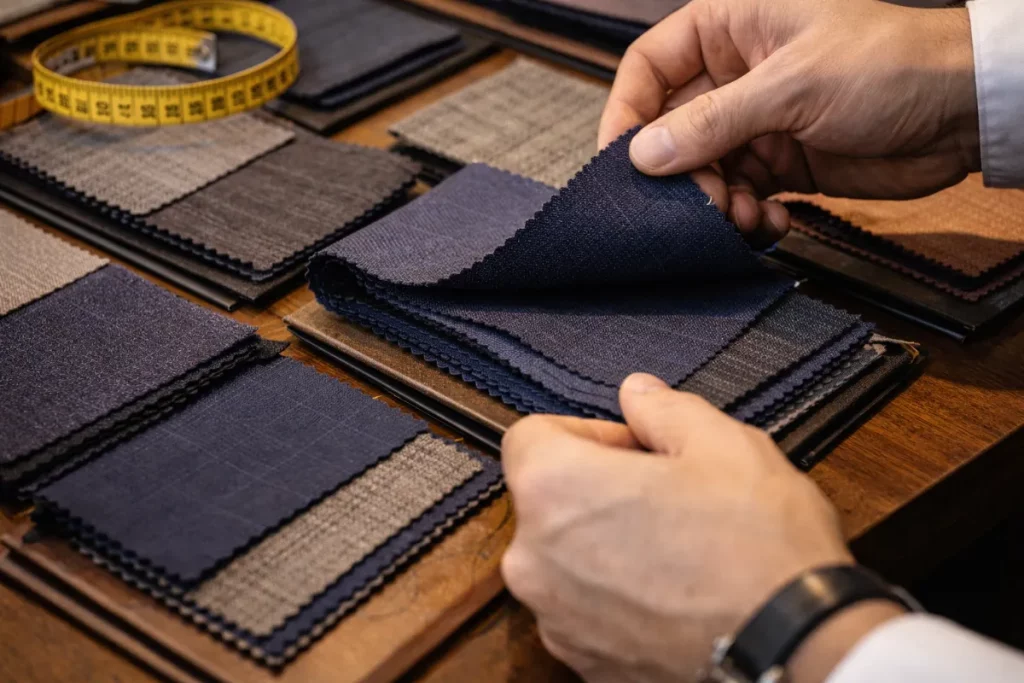
Fabric selection represents one of the most enjoyable yet potentially overwhelming aspects of the process to buy a suit in Bangkok. Walk into most established tailoring shops and you will encounter hundreds, sometimes thousands, of fabric swatches representing different mills, weights, weaves, and price points. Understanding how to evaluate fabric quality and choose the right material for your needs prevents buyer’s remorse and ensures your finished suit performs as expected.
The “Super” numbering system causes endless confusion among first-time suit buyers. You will see fabrics labeled Super 100s, Super 120s, Super 150s, and even higher numbers. This rating refers to the fineness of the wool fiber, with higher numbers indicating finer, softer fibers. However, finer does not automatically mean better. Super 180s fabric might feel incredibly luxurious, but it is also more delicate and prone to showing wear. For most people, Super 110s to Super 130s offers the sweet spot of comfort, durability, and appearance. Save the ultra-fine fabrics for special occasion suits that will not see daily wear.
Fabric weight matters tremendously for both comfort and drape. Most suit fabrics fall between 250 and 350 grams per meter. Lighter weights work beautifully for warm climates and summer suits, while heavier weights provide more structure and work better in cold weather. Bangkok tailors can guide you based on where you will wear the suit, but do not assume you need tropical-weight fabric just because you are in Bangkok. If you live in New York or London, a heavier fabric will serve you better despite being less comfortable during your Thai vacation.
Weave patterns affect both appearance and durability. Plain weaves create smooth, formal-looking fabrics perfect for business suits. Twills add subtle texture and tend to resist wrinkling better than plain weaves. Hopsacks and fresco weaves create breathable fabrics ideal for warm weather. Understanding these differences helps you choose fabric that matches both your aesthetic preferences and practical needs.
Color selection deserves careful thought, especially if this is your first custom suit. Navy and charcoal gray remain the most versatile choices, working for business, formal events, and even semi-casual occasions when dressed down. Mid-gray offers slightly less formality while remaining extremely versatile. Brown suits have experienced a resurgence but work less well for conservative business environments. If you are planning to buy a suit in Bangkok as your primary business suit, stick with navy or charcoal unless you already own those basics.
Pattern choices range from solid colors to subtle pinstripes to bold checks and plaids. For your first custom suit or your primary business suit, solid fabrics or very subtle patterns offer maximum versatility. Bolder patterns can be fantastic for second or third suits, but they limit wearing occasions and date more quickly than classic solids. Your tailor can show you how different patterns appear at various distances and help you understand whether a pattern you love on the swatch will work at suit scale.
Origin matters to some buyers but should not be your only consideration. Italian mills like Loro Piana, Ermenegildo Zegna, and Vitale Barberis Canonico produce exceptional fabrics, but you will pay premium prices. British mills like Holland & Sherry and Scabal also command high prices. However, many lesser-known mills produce excellent fabrics at more accessible price points. Trust your eyes and hands as much as the label. Shops like Unique Tailor and Signature’s Collection carry extensive selections from both premium and mid-range mills, giving you the full spectrum to compare. If a fabric looks good, feels good, and falls within your budget, it is the right choice regardless of whether it comes from a famous mill.
Style Decisions: Creating Your Perfect Suit
Once you have selected your fabric, attention turns to the myriad style decisions that transform cloth into your specific suit. This is where the process to buy a suit in Bangkok becomes truly personal, as you make choices that reflect your taste, body type, and how you want to present yourself to the world. While trends come and go, understanding classic proportions and what works for your build ensures your suit remains stylish for years.
Jacket style begins with the overall silhouette. British-inspired cuts feature more structure, padded shoulders, and a defined waist suppression that creates an hourglass shape. Italian cuts tend toward softer shoulder construction, natural shoulder lines, and less dramatic waist suppression for a more relaxed appearance. American cuts traditionally offered the least structure and most generous proportions, though contemporary American tailoring has moved toward slimmer fits. Discuss with your tailor which overall aesthetic appeals to you, keeping in mind that your body type influences what looks best. The anatomy of a bespoke suit guide explains how each construction approach affects the finished garment.
Lapel style and width significantly impact your suit’s character. Notch lapels remain the standard for business suits and work for virtually every occasion. Peak lapels add formality and visual interest, working beautifully for weddings, evening events, and formal occasions. Lapel width should generally balance with your body proportions, with broader builds carrying wider lapels more successfully than slim builds. Current fashion favors medium-width lapels, typically around three to three and a half inches, which provides timeless appeal.
Button configuration seems simple but matters more than many realize. Single-breasted jackets can have one, two, or three buttons, with two-button configurations remaining the most classic and versatile choice. Three-button jackets create a longer visual line but can look dated if proportions are not perfect. One-button jackets appear fashion-forward and work well for evening wear but less so for conservative business environments. Double-breasted jackets make a bold statement but require confidence to wear and do not work well for all body types.
Pocket styles add subtle personality to your suit. Flap pockets represent the standard choice for business suits, offering clean lines and protection for pocket contents. Patch pockets create a more casual appearance, appropriate for summer suits, sport coats, and less formal occasions. Jetted pockets appear on tuxedos and very formal suits, offering the sleekest look. Ticket pockets add a traditional British detail that some love and others find unnecessary. Your tailor can show you how different pocket styles appear and help you understand what suits your needs.
Trouser decisions deserve as much attention as jacket choices. Rise refers to where the trousers sit on your body, with lower rises creating a more contemporary look and higher rises offering more comfort and a classic appearance. Leg opening width has varied dramatically over decades, but modern suits typically feature leg openings between 16 and 18 inches, with slimmer builds trending toward the lower end. Pleats versus flat front represents another style choice, with pleated trousers offering more room and movement while flat-front trousers create cleaner lines.
Trouser break describes how the fabric sits on your shoes. A full break creates a pronounced fold where trouser meets shoe, offering a traditional appearance but potentially looking dated today. A half break provides a slight fold, balancing classic and contemporary aesthetics. No break means the trouser hem just touches the shoe with no excess fabric, creating the cleanest modern look but requiring precise tailoring. When you buy a suit in Bangkok, discuss your break preference carefully, as this detail dramatically affects how your suit appears from a distance.
The Measurement Process: Precision and Communication
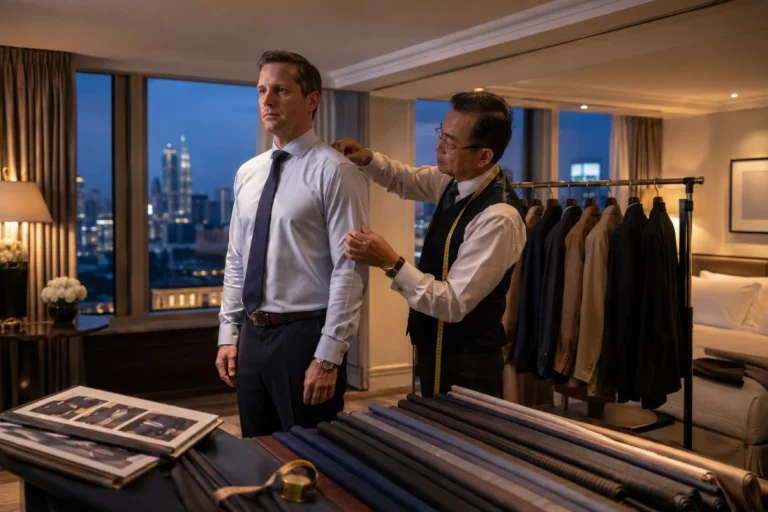
Accurate measurements form the foundation of any successful custom suit, transforming standard patterns into garments fitted specifically to your unique body. When you buy a suit in Bangkok, the measurement session should feel thorough and professional, with your tailor taking numerous measurements while paying attention to your posture, shoulder slope, and any asymmetries that need accommodation.
A comprehensive measurement session typically includes twenty-five to forty distinct measurements, covering everything from obvious dimensions like chest and waist to subtle details like back width, sleeve pitch, and the distance from your neck to your waist. Your tailor measures over a dress shirt or thin shirt rather than bare skin or heavy clothing, as this provides the most accurate representation of how you will actually wear the suit.
Stand naturally during measurement rather than trying to improve your posture or hold your breath. Your suit needs to fit the body you have, not the body you wish you had or the posture you think you should maintain. Artificial posing during measurement creates suits that fit poorly in real-world wearing conditions. If you typically carry tension in your shoulders or stand with one shoulder slightly higher, your tailor needs to know this and account for it in the pattern.
Communication during measurement helps your tailor understand your preferences. If you prefer more room in the seat and thighs, mention this before they record your measurements. If you want a trim fit through the chest and waist, say so. If you have a favorite suit that fits perfectly in certain areas, tell your tailor what you love about that fit. These details help them adjust their standard patterns to match your preferences rather than simply creating their default style in your size.
Many Bangkok tailors photograph clients during the measurement session or keep detailed fitting notes for future orders. This benefits both parties, as it means subsequent suits can be ordered with minimal fuss once they understand your measurements and preferences. If you plan to order additional garments from the same tailor during future visits, this record-keeping proves invaluable.
Fittings: The Path to Perfect Fit
The fitting sessions separate adequate custom tailoring from truly exceptional work. When you buy a suit in Bangkok, expect at least two fittings, with the best tailors often incorporating three or even four sessions to ensure absolute precision. Understanding what happens at each fitting and how to communicate effectively during these sessions helps achieve the perfect final product.
The first fitting typically occurs two or three days after your initial measurement session. At this stage, the suit exists in a basted or loosely constructed state, allowing the tailor to make significant adjustments without wasting finished work. You will try on the jacket and trousers, and your tailor will assess how everything sits on your body. They are checking shoulder fit, sleeve length, collar roll, chest ease, waist suppression, trouser rise, and dozens of other details that contribute to proper fit.
Expect your tailor to mark adjustments directly on the fabric with chalk or pins during this fitting. They might mark the sleeves to be shortened, pin the waist to be taken in, or adjust where the collar sits on your neck. This is your opportunity to provide feedback about fit and comfort. If something feels too tight, too loose, or simply uncomfortable, speak up immediately. It is much easier to make corrections at this stage than after the suit is completed.
Move around during fittings rather than standing rigidly at attention. Raise your arms, sit down, button and unbutton the jacket, walk around the fitting area. A suit that looks perfect when you are standing perfectly still but restricts movement or pulls awkwardly when you sit is not properly fitted. Your tailor wants to see how the suit performs during normal activities, so demonstrate how you will actually use the garment.
The second fitting occurs after your tailor has made the adjustments marked during the first session. The suit now appears much more finished, with most construction completed. This fitting focuses on fine-tuning rather than major adjustments. Sleeve length might be tweaked by a quarter inch, trouser length perfected, or minor alterations made to improve drape and comfort. If everything looks and feels right, this might be your final fitting before the completed suit.
Some situations warrant a third fitting, particularly if significant adjustments were needed after the first fitting or if you are having multiple garments made simultaneously. Do not feel pressured to accept a suit that does not fit perfectly just because you are running short on time or feel you have already had multiple fittings. Reputable tailors would rather delay completion slightly than send you home with an imperfect product that damages their reputation. For a more concise overview of the fitting process, the step-by-step tailoring guide covers the key checkpoints at each fitting stage.
Understanding Construction Quality
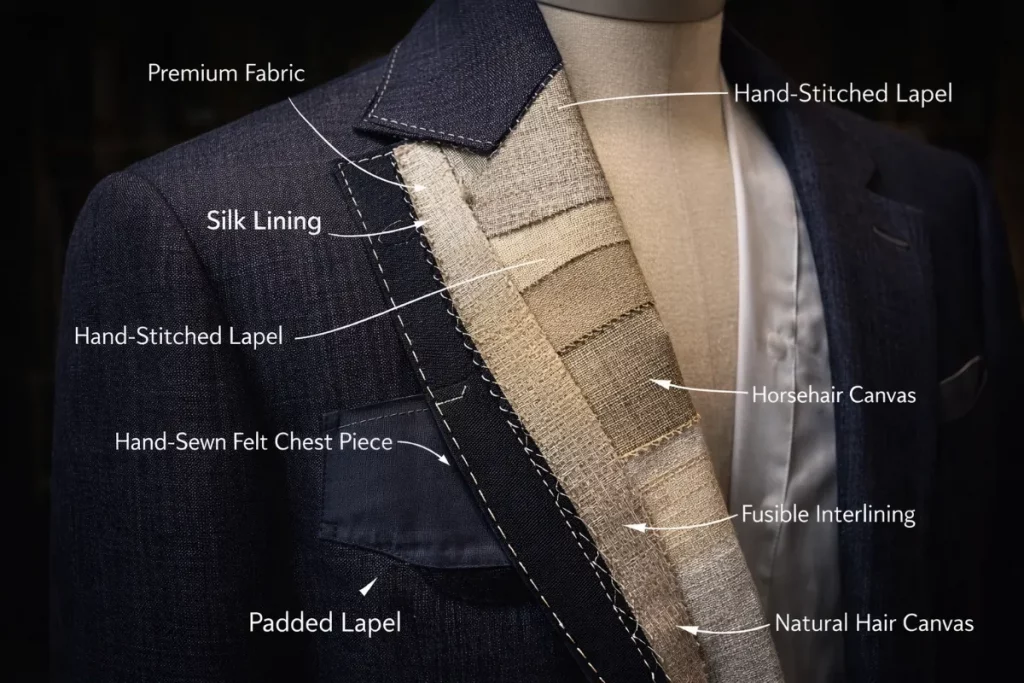
Not all custom suits achieve the same construction quality, even when using identical fabrics. When you buy a suit in Bangkok, understanding the difference between construction methods helps you evaluate whether you are getting fair value for your investment and ensures you know what to expect from your finished garment.
Canvas construction represents one of the most significant quality markers in suit making. The canvas refers to a layer of horsehair, wool, or synthetic material that sits between the suit’s outer fabric and inner lining, providing structure and allowing the jacket to drape naturally on your body. Full-canvas construction means this canvas extends throughout the entire front of the jacket, offering the highest quality and best ability to conform to your body over time. Half-canvas construction uses canvas in the chest area only, with the lower portion fused, offering a middle ground between quality and cost. Fully fused jackets skip the canvas entirely, heat-bonding fabric and lining together, which creates a stiffer feel and less graceful aging. For a detailed breakdown of how each method affects the finished bespoke suit, see our dedicated suits guide.
Hand stitching versus machine stitching represents another quality consideration. Hand-stitched details like working buttonholes, hand-sewn lapels, and hand-attached buttons demonstrate craftsmanship and create subtle differences in how the garment moves and ages. However, modern machine stitching on major seams is not necessarily inferior, particularly for everyday suits. Many Bangkok tailors offer a hybrid approach where structural seams use machine stitching for durability while finishing work receives hand attention for character and flexibility.
Lining choices affect both comfort and durability. Full linings provide the smoothest experience when putting on and removing the suit but can feel warm in hot weather. Half linings reduce weight and increase breathability while potentially affecting how smoothly the jacket slides over your shirt. Quarter linings or unlined jackets maximize breathability and create a casual appearance but may show more wrinkling on the back of the jacket. Discuss with your tailor which approach makes sense for your climate and wearing situations.
Finishing details reveal the level of care invested in your suit. Look for clean, even stitching at seams, well-executed buttonholes that are not ragged or loose, buttons sewn securely with proper shanks, and linings that do not pull or bunch. Inside the jacket, quality work shows in neat seam finishing, properly secured canvas, and attention to invisible details that most people never see but contribute to how the garment wears and ages.
Pricing and Payment Considerations
Understanding the true cost when you buy a suit in Bangkok helps avoid surprises and ensures you are getting fair value. Bangkok’s reputation for affordable tailoring is well-deserved, but prices vary enormously based on fabric choices, construction methods, and the tailor’s expertise and reputation.
Entry-level suits from tourist-focused tailors might cost between two hundred and four hundred dollars, but these typically use lower-quality fabrics and fused construction with minimal hand-finishing. Mid-range tailors offering better fabrics and half-canvas construction typically charge between five hundred and one thousand dollars. High-end Bangkok tailors using the finest Italian fabrics and full-canvas construction with extensive hand-finishing might charge twelve hundred to two thousand dollars or more, though this still represents significant savings compared to equivalent work in Western markets.
These prices typically cover a two-piece suit (jacket and trousers). Add-ons like an extra trouser, vest, or additional details such as working buttonholes, pick stitching, or hand-sewn linings increase the final cost. Shirts usually range from forty to one hundred fifty dollars depending on fabric and construction. Ties, pocket squares, and other accessories add to your total investment. For a complete pricing breakdown, the Bangkok tailor price guide covers every garment type across all quality tiers.
Most Bangkok tailors require a deposit when you place your order, typically thirty to fifty percent of the total cost. This ensures serious commitment from both parties and covers the tailor’s material costs. The balance comes due when you collect your finished garment at the final fitting. Cash remains the preferred payment method for many smaller shops, though established tailors increasingly accept credit cards, sometimes with a small surcharge added.
Beware of deals that seem too good to be true. When someone offers to make you three suits, five shirts, and two ties for four hundred dollars total, you are not getting exceptional value. You are getting cheap materials, rushed construction, and likely disappointment. Quality tailoring requires skilled labor, good materials, and adequate time. Unrealistically low prices indicate corners being cut somewhere in the process. The Bangkok tailor scams guide details the most common traps and how to avoid them.
Common Mistakes to Avoid
First-time buyers make predictable mistakes when they buy a suit in Bangkok. Learning from others’ experiences helps you avoid these pitfalls and enjoy a successful tailoring experience.
Rushing the process represents the most common mistake. Trying to complete a quality suit in twenty-four or forty-eight hours almost guarantees compromise on either fit or construction quality. Allow at least four to five days in Bangkok if possible, with a minimum of three days for anything approaching quality work. Some tailors can work faster, but they are the exception rather than the rule.
Choosing fabric based solely on Super number or mill name leads many buyers astray. A Super 180s fabric sounds impressive but might be entirely wrong for your needs if you want a durable everyday suit. Similarly, insisting on a famous Italian mill when a lesser-known source offers comparable quality at lower cost wastes money. Trust your eyes, hands, and your tailor’s recommendation based on your specific needs rather than defaulting to whatever has the most impressive label.
Failing to do adequate research before choosing a tailor leads to disappointment. Fifteen minutes searching for reviews and asking for recommendations can save you from tourist-trap tailors who prioritize volume over quality. Read reviews from multiple sources, ask your hotel concierge for recommendations, and check online forums where experienced travelers share their Bangkok tailoring experiences. Our 30 best tailors in Bangkok guide is a good starting point for shortlisting shops.
Accepting fit issues out of politeness or cultural deference prevents you from getting the suit you paid for. If something does not fit properly during a fitting, speak up clearly and firmly but respectfully. Your tailor would rather make adjustments than have you leave Bangkok unhappy with your purchase. They cannot fix problems you do not communicate.
Choosing overly trendy styles creates suits that date quickly. Ultra-slim fits, extremely narrow lapels, very low trouser rises, or other fashion-forward details might look current now but can appear dated within a few years. Unless you plan to replace your wardrobe regularly, stick with more moderate, classic proportions that transcend temporary trends.
Neglecting to discuss exactly what is included in your quoted price sometimes leads to surprise charges. Confirm whether the price includes things like trouser cuffs or hemming, working buttonholes, pocket squares, or other details. Get a written quote that itemizes everything so no ambiguity exists about what you are paying for.
After You Leave Bangkok: Care and Maintenance
Your relationship with your Bangkok suit continues long after you have returned home. Proper care and maintenance ensure your investment provides years of excellent service and continues looking sharp through countless wearings.
Transporting your new suit home requires some thought. Most tailors provide garment bags for your suit, but consider carrying it onto the plane rather than checking it if possible. This prevents the suit from being crushed under other luggage and ensures it arrives in the same condition it left the tailor’s shop. If you must check it, pack it in a rigid suitcase with minimal other items to reduce compression.
Once home, have your suit professionally dry cleaned only when necessary rather than after every wearing. Excessive dry cleaning degrades fabric over time, wearing out suits prematurely. Instead, brush your suit after wearing to remove surface dirt and dust, air it out between wearings, and spot-clean minor stains. Most suits only need professional cleaning a few times per year unless you work in particularly dirty environments or spill something significant on the fabric.
Proper storage extends suit life considerably. Use wooden hangers that match your shoulder width rather than wire hangers that create misshapen shoulders and stress fabric. Give suits at least twenty-four to forty-eight hours of rest between wearings, allowing the fabric to recover from the stress of wear and any moisture absorbed from your body to dissipate. Rotating between multiple suits prevents any single garment from wearing out prematurely.
Minor issues like loose buttons or small tears should be addressed promptly by a local tailor before they become major problems. Most tailors anywhere can handle simple repairs, and addressing issues early prevents them from escalating into expensive fixes or permanent damage. If you need more significant alterations because your weight changed or you want to update the fit, find a local tailor experienced with quality garments who can work sympathetically with the existing construction.
If you were particularly happy with your Bangkok tailor, maintain contact for future orders. Many established Bangkok tailors will work from your existing measurements for subsequent orders, allowing you to commission new suits by email and have them shipped internationally. This works particularly well once you have established a relationship and the tailor has your measurements and style preferences documented. Some clients develop decade-long relationships with their Bangkok tailors, ordering new suits, shirts, and other garments without returning to Thailand.
Making the Most of Your Bangkok Tailoring Experience
The decision to buy a suit in Bangkok opens doors beyond simply acquiring new clothing. Approached thoughtfully, this experience offers insights into craftsmanship, helps you develop your personal style, and can create lasting relationships with skilled artisans who take genuine pride in their work.
Consider ordering multiple pieces during your visit if your budget allows. The cost-effectiveness of Bangkok tailoring makes this practical in ways it might not be elsewhere. A suit, several custom shirts, and perhaps casual trousers or a sport coat provide versatility while ensuring maximum value from your trip. Many tailors offer package deals that provide better per-piece pricing when you order multiple items simultaneously.
Do not limit yourself to business suits if that does not reflect your lifestyle. Casual sport coats, linen suits for summer, tuxedos for formal events, or even custom shorts and casual shirts all benefit from skilled tailoring. Bangkok’s tailors excel at variety, so commission pieces that you will actually wear and enjoy rather than defaulting to business suits simply because that is what you think you should order.
Take the time to understand what you are getting. Ask your tailor to explain their construction methods, show you fabric samples before they are cut, and walk you through the fitting process. Most tailors genuinely enjoy sharing their knowledge with interested clients, and this understanding helps you appreciate the craftsmanship going into your garments while making you a more informed customer for future purchases.
Be realistic about your expectations while maintaining high standards. Bangkok tailors produce excellent work, but they are not magicians. If you have a particularly challenging body type or very specific fit preferences, communicate these clearly and be patient during the fitting process. At the same time, do not accept poor work simply because you are not in your home country. Quality tailors take pride in their reputation and want you to be genuinely satisfied with what they create.
Your Bangkok Tailoring Journey
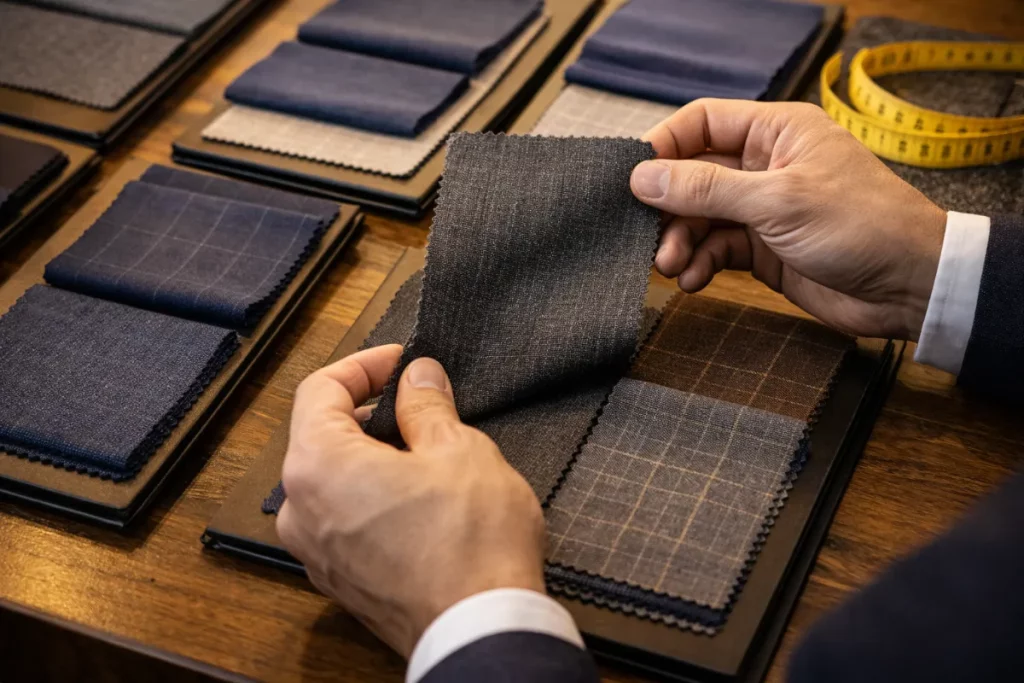
The experience to buy a suit in Bangkok combines practical value with cultural experience, yielding not just clothing but memories and often relationships that extend far beyond the transaction. Whether this is your first custom suit or you are an experienced customer seeking better value than your home market offers, Bangkok’s tailoring scene provides exceptional opportunities for those who approach it thoughtfully.
Success comes from doing your research, communicating clearly, allowing adequate time, and working with reputable tailors who value their craft and their reputation. The suit you commission in Bangkok can become a wardrobe staple that serves you reliably for years, a tangible reminder of your visit and a testament to the skill of Bangkok’s master tailors.
Start with our 30 best tailors in Bangkok guide to find the right shop for your budget and style. Read the Bangkok tailor scams guide to know what to avoid. And check the price guide to understand what fair pricing looks like before you walk into any shop. With these resources and the knowledge from this guide, you are well prepared to buy a suit in Bangkok with confidence.
Frequently Asked Questions
How much does it cost to buy a suit in Bangkok?
Suit prices in Bangkok vary significantly based on fabric quality and construction methods. Entry-level suits from tourist-focused shops start around $200 to $400, but these typically use lower-quality materials and fused construction. Mid-range tailors offering better fabrics and half-canvas construction charge $500 to $1,000. High-end Bangkok tailors using premium Italian fabrics and full-canvas construction with hand-finishing typically charge $1,200 to $2,000+. While this represents the premium end, it is still 40 to 60 percent less than equivalent work in Western markets.
How long does it take to get a custom suit made in Bangkok?
Quality custom suits require a minimum of 3 to 4 days, with many reputable tailors preferring 4 to 5 days. This timeline includes an initial measurement and consultation session, a first fitting after the suit is basted together (usually 2 days later), and a final fitting once completed. Some tailors advertise 24 to 48 hour rush services, but quality often suffers when craftsmen are pressured to work too quickly. Plan for at least 4 days in Bangkok for the best results.
Can I trust Bangkok tailors? How do I avoid scams?
Most established Bangkok tailors are reputable professionals who depend on repeat business and referrals. However, scams do exist. Warning signs include aggressive street touting, prices that seem too good to be true (like 3 suits for $300), pressure to buy immediately, shops that refuse to show fabric samples or completed work, and tailors who will not allow adequate time for proper fittings. Stick with tailors who have extensive online reviews, transparent pricing, professional showrooms, and willingness to take the time necessary for quality work.
What is the best area in Bangkok to find tailors?
The highest concentration of reputable tailors is found in Sukhumvit (especially between Soi 4 and Soi 19), Silom, and the Siam area. These neighborhoods host established shops serving both tourists and local professionals. While you might assume tailors in tourist areas charge more, the reality is that reputable shops in these locations often provide better service because they depend on their reputation. Avoid tailors who tout aggressively on the street, regardless of location.
What should I bring to my first tailor appointment?
Bring reference images of suits you admire, photos of suits you currently own that fit well, and examples of styles you want to avoid. Wear or bring a well-fitted dress shirt and dress shoes, as you will likely try on your suit during fittings and the tailor needs to see how it looks with appropriate clothing. If you have specific fabric preferences or color requirements, bring samples or clear descriptions. Finally, bring an open mind and enough time for a thorough consultation.
Should I choose Italian or British fabric?
Neither origin is inherently better. It depends on your needs and preferences. Italian fabrics often feature softer hand-feel and more luxurious drape, while British fabrics tend toward durability and structure. However, many excellent fabrics come from lesser-known mills. Focus on the fabric’s weight (appropriate for your climate), Super number (110s to 130s offers the best balance of comfort and durability for most people), and how it looks and feels rather than obsessing over the mill name. Your tailor can guide you based on where you will wear the suit and your lifestyle needs.
What is the difference between half-canvas and full-canvas construction?
Canvas refers to a layer of material (traditionally horsehair and wool) between the suit’s outer fabric and lining that provides structure. Full-canvas construction extends throughout the entire jacket front, offering superior drape and the ability to conform to your body over time. This is the highest quality option. Half-canvas uses canvas only in the chest area, with the lower portion fused, providing a middle ground between quality and cost. Fused jackets skip canvas entirely, heat-bonding layers together, which is cheaper but creates a stiffer feel and does not age as gracefully. For a suit you will wear regularly, half or full-canvas is worth the investment.
Can I order more suits from my Bangkok tailor after I leave Thailand?
Yes, many established Bangkok tailors work with international clients remotely once they have your measurements and style preferences on file. After your first visit, you can typically order additional suits, shirts, or trousers by email, choosing fabrics from photos or swatches the tailor sends. They will create the garments based on your existing measurements and ship them internationally. This works best when you have already established a relationship and the tailor has successfully completed at least one order for you in person.
What if my suit does not fit properly after I get home?
Minor adjustments can usually be handled by a skilled local tailor in your home country. Most tailors anywhere can adjust sleeve length, take in or let out waist suppression, or hem trousers. However, major structural issues (shoulder fit, jacket length, significant waist adjustments) are difficult to fix and should be addressed while you are still in Bangkok. This is why allowing time for multiple fittings is crucial. If you discover problems after leaving, contact your Bangkok tailor. Some will offer credit toward future orders or work with you to resolve issues, though options are limited once you have left Thailand.
Is it worth buying shirts and other items along with my suit?
Absolutely. Custom shirts in Bangkok typically cost $40 to $150 depending on fabric quality, representing exceptional value compared to Western markets. Since you are already working with the tailor and they will have your measurements, adding shirts, ties, trousers, or casual wear makes sense. Many tailors offer package pricing that reduces per-item costs when you order multiple pieces. Just ensure you are not overextending your budget or ordering items you will not actually wear. Focus on pieces that fill genuine gaps in your wardrobe.
Essential Bangkok Tailoring Resources
Everything you need to make informed decisions about your custom clothing journey